 I had a teacher in junior high school who had a few pet peeves.
Mostly, her pet peeves were words.
She forbade us from using the word “cool” unless we were referring to temperature. “Ain’t” was outlawed for obvious reasons. “Yeah” was out too.
And “can’t.” She never allowed us to speak the word “can’t” when prefaced with “I.” As in “I can’t.”
And so, this little old teacher who might as well have been a hundred years old would stomp across the room and rap on a student’s desk with her pencil, staring down thirteen-year-olds who stood head and shoulders above her, demanding to know, “What do you mean, you can’t?” The indignation in her voice thundered and her old lady perfume overwhelmed.
It’s funny the little things you remember.
Although the other scraggly, pubescent students and I managed to scrub the word “can’t” from our vocabulary for a few years… between 10:15 and 11:00 am each school day, I wonder how many times we have said it in the years since we left that classroom.
Now, I’m an art teacher with a classroom of my own.
When I take my high school students to the local art museum, it is an inspiring time, a time to be filled with wonder and awe at the great heritage of human creativity. We wander the halls and get lost in the silence and contemplate the beauty around us. But I know that wonder and awe is not the only emotion filling the minds of my students.
“What do you think of this painting?” I ask a student. He twists his face a bit, as I anticipate some kind of deep response.
“I could never do that,” he answers. I am disappointed with his answer.
“Why not?” I ask.
“I just… can’t.”
So often the emotional response of awe-struck wonder has a twin: personal defeat. We feel it when we return home from looking at great art, and some primal urge rises up inside us to do something creative.
But we say, “I can’t.”
Or perhaps you’re like me and you feel it when you watch great athletes compete. We admire the greatness of their athletic prowess so much, it is easy to look at ourselves with a bit more loathing and say, “I could never do that. Why bother?” Some of us gain equal parts inspiration and defeat from watching great speakers speak or great singers sing. We watch our heroes and we long to be like them, but we know, inside, that we just can’t.
Some of us even come to church to worship and pray, yearning to offer our gifts to the great church body. But we walk out the doors, not empowered, but with the same feeling of, “I can’t.” As if somehow the Spirit of power has been shut off from us, given to a select few while the rest of us sit with hands folded quietly. As if the God who empowers weak people to do great things for His name even has the word “can’t” in His vocabulary.
I stood face to face with my student, even having to look up a bit to meet his eye level, surrounded by all that great art, the air thick with greatness.
“Why can’t you?”
What could it possibly matter if he did not have the same talent that those men and women had? So what if he did not have the training? So what if any painting he created would never come close to the majesty of the masters, or be seen by anyone at all? If something inside his spirit was urging him to create something, why couldn’t he? Was there anything but fear stopping him? I looked in his eyes with all of the thunder of my old teacher, because it suddenly dawned on me just how many hundreds of times in my life I must have stopped short of doing something I wished to do, even something God himself was placing on my heart, simply by speaking that one little four-letter word over myself.
What is stopping us from doing the things that our spirits yearn to do? Usually, it is a very flimsy barrier which binds us in fear and inaction. “Can’t” often is just shorthand for “Haven’t,” “Not yet able,” or “Too afraid,” or “Don’t have the willpower,” or “Ashamed to try.”
I am convinced of this too: that the more habitually we apply the word “can’t” to ourselves, the more habitually we apply it to others.
“You can’t… “
Entire walls and cities and even churches are built from bricks made of “can’t.” They are designed to keep certain people out, watching but not participating, yearning to do more but feeling defeated before they even try.
And soon, our self-defeat, shame and regret has spread and crippled another person, someone who God wants to use to change the world.
I am on a mission. It’s a mission not to become a better person, but a whole person.
And in many ways, my mission starts with re-training. Part of that re-training is learning which words I should not say anymore.
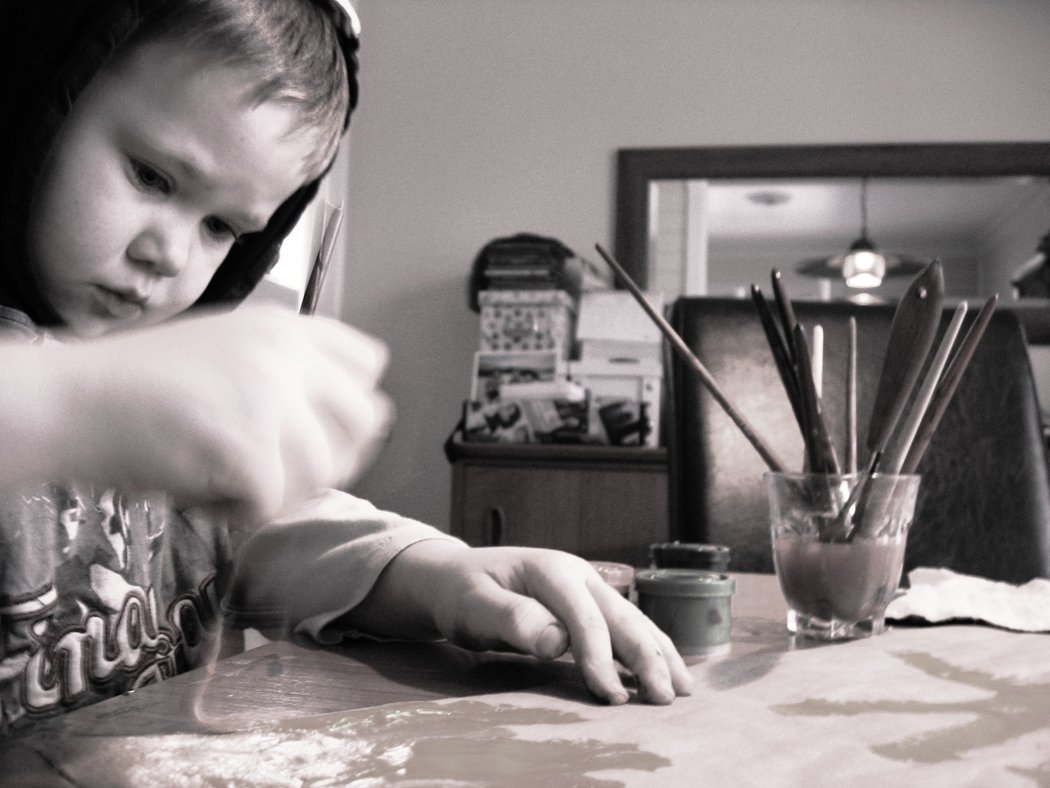
Flickr photo (cc) by zophonias