I am the product of two headstrong, vibrant, daring lives coming together. In the early ’80s, a young Canadian pilot and a young British teacher moved to Ethiopia. He went to fly famine relief, she to teach at a missionary school. They met there, dated, survived a long distance stint, and then got married. I was born in Ethiopia, along with my two beautiful sisters after me.
Throughout my childhood my parents were selfless, supportive, caring, and assertive. They were excellent conversationalists; I watched them connect with friends on the mission field, engage local people, and charm supporters back home. (Our family did the expected song-and-dance for supporters in Western Canada and Southern England, prompting compassionate churchgoers to supplement my father’s modest mission aviation salary.)
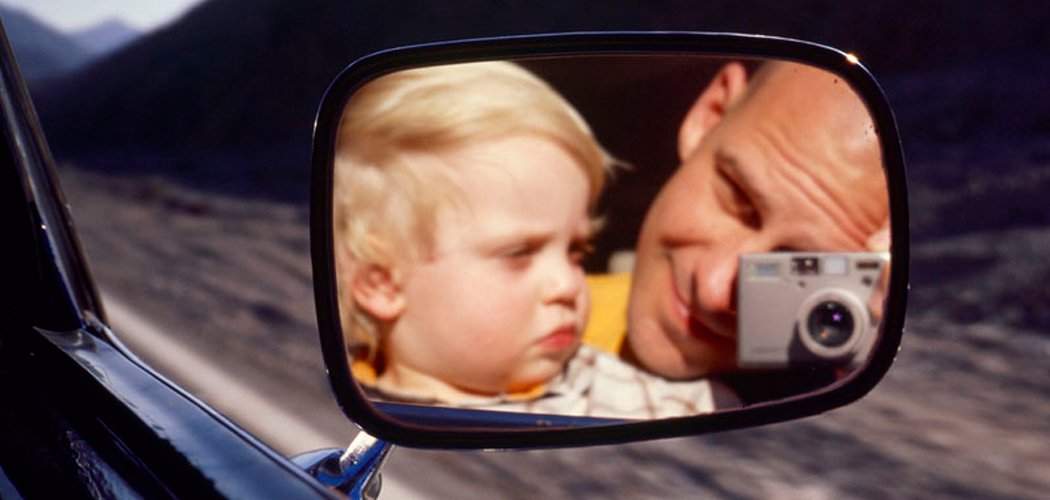
My Dad and I
My father is always keen to do things. He’s one of the most driven people I know. An excellent organizer, manager, and leader, he propels himself and others headlong into projects and pursuits. An engineer by trade, he understands metallic, moving, mechanical things. When these things break, he fixes them. As I grew up he would pull me into projects like fixing toilets, building sheds, or restoring tree houses. We went mountain climbing, spelunking, sailing, white-water rafting.
Because I love learning, I took great pride in the skills he taught me. My hunger for an adrenaline rush was satiated in those outdoor adventures. But as I grew into myself, I found I was no longer quite as keen to be the mechanic’s assistant, rather finding my strengths in language and creativity. I watched my sister jump at the opportunity to fill the space by my dad’s side. Shame — the feeling of being small — seized me as I spent less time with him.
In the world of mechanics, accomplishment seems blissfully black and white: if you fix the broken object, you succeed. If it works better than before, you have done your job. But my head was in the dreamy world of the arts, and it can be hard to praise things that are so abstract and abstruse.
Something in me began to perceive a validation void. Sometimes I felt unappreciated because being good enough meant having a tangible accomplishment to be praised for.
The Five Love Languages
It’s true: in my teenage years I didn’t feel like my dad loved me enough. But it wasn’t due to any lack of love on my dad’s part. Although he’s not overly emotional, he has loved me intensely and constantly from the day I was born. I see it now in a way I’ve never seen it before. How could I have missed it my entire childhood?
After reading Gary Chapman’s The Five Love Langauges, it all began to make sense. I realized I receive love in a different way than my dad shows it. I wasn’t able to fully appreciate his love because he showed it to me in a way that didn’t resonate powerfully to me.
Chapman’s premise is that human beings can give and receive love in five basic ways: physical touch, gifts, quality time, words of affirmation, and acts of service. I’ve found Chapman’s observations to be insightful, incredibly helpful, and true overall. Understanding differing love languages gave meaning to the mysterious void of affection and validation I had sensed as a teenage boy, though I knew in my head that my dad really did love me.
Out of the five types, my dad shows love mostly through acts of service. For my dad, doing something for someone is showing love. This is a significant difference between us because I understand love as being with someone. For me, affinity grows through quality time, physical touch, and affirming words. A disconnect formed when my dad’s time spent with me was geared around an activity like a job; I wrongly interpreted this as distraction. It left me with the impression he didn’t appreciate me, so I would shut down. I looked elsewhere for the undivided attention I craved. Many people whose primary love language is quality time detest it when others appear distracted from them in communication. It makes so much sense now.
Looking back, I’m astounded at the acts of service I can recall and can now rightly interpret as love. For example, my high school girlfriend lived across the city, and my dad frequently drove me the 40 minutes to her house and back. In hindsight, I see the incredible love and care in this act of service. Back then, I saw it as a chore he was doing for me, and it just made me feel guilty.
Father Matters
British counselling psychologist Lin Button has written a book entitled Father Matters which expounds upon the effects of not properly receiving a father’s love. Wounds we sustain from fathers and father figures create deep emotional and psychological scars on our sense of personhood. Not receiving my father’s love created other issues of inferiority, insecurity, people-pleasing, fear of failure, and fear of God the Father. Gary Chapman’s book was an important first step in helping me heal, and learning about father wounds brought me further along in that process. As an adult, all these years later, the realization that my dad actually loved me, and was trying to show it in the way he knew how, has made a huge difference. For those of us who have not known our father’s love, God the Father is asking whether you will allow him to repair you through discovering His love.
Knowing I was loved started a snowball of healing in my sense of self. I gave God the Father permission to walk through the walls of my heart. As a result, He began to put things right — restoring my worth, empowering my will, and giving me a mission to find out how to love and how to receive love. Especially with you, Dad.
Flickr photo (cc) by Klintberg
This article originally appeared in the November December 2013 issue of Converge magazine.