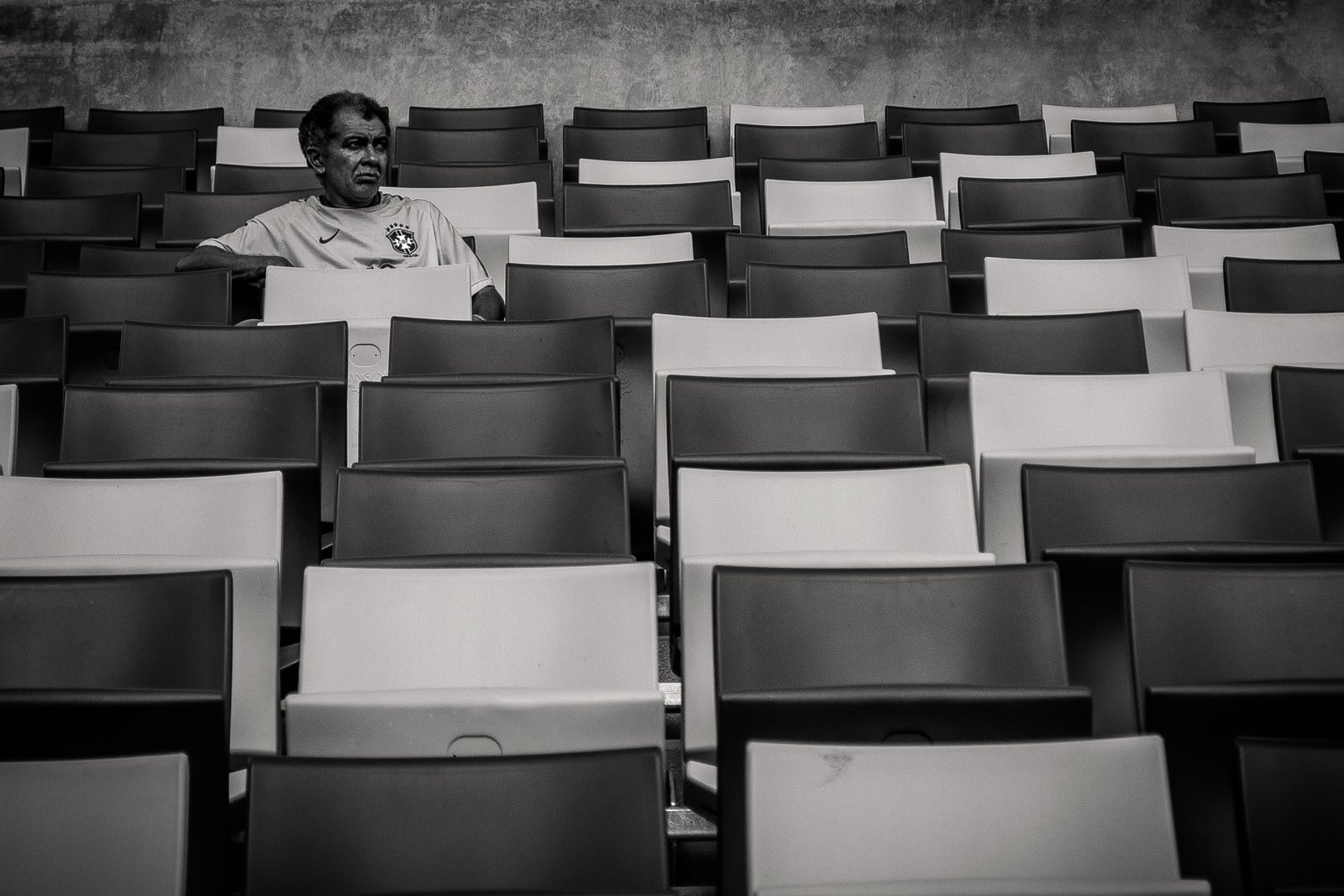
When FIFA announced that Brazil was going to host the 2014 World Cup there was instant excitement. Football (soccer) lovers thought of the passion and art of the Brazilian game and Pelé and something pure and colourful.
http://youtu.be/9jzlc4KVlw0
Fans understood there could be no better host for the World Cup than Brazil in the jaded, monetized age of today’s modern game. The decision seemed to herald nothing but good things for the future of football, as the increasing global focus on European leagues and competitions threatened to leave South American football behind; taking the Cup to Brazil — one of football’s spiritual homes — would reaffirm the game as a global love affair and not a mass capitalist enterprise operating out of Europe. Everyone was thinking the same thing: cue the samba music. Let’s watch that fine Brazilian footwork bring some flair back to the game.
http://youtu.be/uVueW6X7TM0
Yet all this early romanticism eventually found its counterpoint in some grittier social and political realities — realities reflected in the Brazilian national squad itself.
The Team

The Brazilian team is fighting to win the tournament not just because the players and the country they represent are passionate about football, but also because Brazil desperately needs some sort of national victory as a symbol of hope. For there are two sides to this World Cup, just as there are two sides to the Brazilian national team.
The Realities
Brazil has spent somewhere between $11 to $14 billion to put on the World Cup, making it the most expensive World Cup ever held. Yet poverty is widespread in Brazil, and though it is concentrated in the favelas (slums) that sprawl across the outskirts and hills of cities like Rio de Janeiro, it is endemic throughout the country. Public services for the poor, like healthcare and education, are a matter of serious concern. In the eyes of the impoverished and socially conscious, these services should take first priority over trophy stadiums and the satisfaction of monied tourists.

The disparity between the mass expenditure on the World Cup and the lack of government spending to care for the Brazilian people has been too great for many within Brazil to accept, and protests and riots erupted in the run up to the World Cup so. The Brazilian government responded to the unrest with a hardline policy of “pacification,” which has amounted to an unconscionably forceful repression of citizen dissent by the military and the police. As a security precaution for the World Cup (though official rhetoric has it that this is not the primary reason for the operations) many of the favelas in major cities like Rio have been “pacified” by the tactical violence of the military and then placed under the total control of the police.

These protests are not part of the official version of the FIFA World Cup, and we do not see them on primetime TV coverage of the tournament.
Instead, we get colourful, playful animations of smiling faces and bouncing footballs, Coke advertisements, and the helicopter camera shots of Rio’s iconic Cristo Redentor statue high above the city, arms spread wide, embracing the world.

The tragedy of all this is that the very favelas that have turned into quasi police states are traditionally places where football has existed in its purest, most democratic form.
Stories of Brazilian greats like Pelé all seem to begin with makeshift footballs (bundled up socks and shirts nicked from clotheslines in Pelé’s case) dribbled through the narrow streets of a favela and countless hours of small side games played in any available stretch of dusty street.
At a time when all the youngsters in the favelas should be out in the streets pretending to be their favourite Brazilian soccer stars, they are likely being encouraged to stay indoors by their parents and military and civilian police.
This state of political and social affairs is hard to reconcile with what is going on inside the stadiums during tournament play. But I am not sure that it needs to be reconciled completely, or even should be. Allowing the two dissonant realities of this World Cup to remain in conflict and awkward parallel seems to be the only way to accord either of them the respect they deserve.
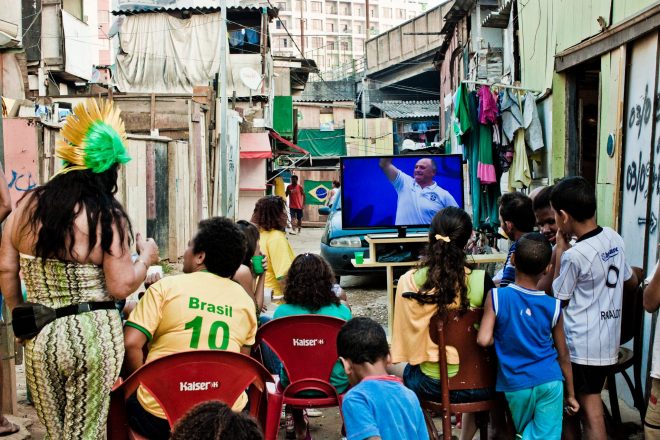
The tension between these two very different sides of the World Cup also lends an extraordinary poignancy to every match, where each moment and show of sublime skill is weighted by the human cost paid to make such display possible. Such emotive gravity appears when you allow the hidden story of the Cup to bleed some way into what is occurring on the pitch, but that hidden story can also be held at a distance while the game is being played, if only so you can focus solely on the beauty of football for a brief, focused moment without distraction.
Love of the Game
There is something about the game of football that is inherently resistant to a pitch invasion of political and social concerns. Once the whistle sounds for play to begin, a free forum for athletic expression and competition opens up — and keeps all else out — for 90 minutes. Inside the clean geometry of a football pitch, with its tall pair of nets, crisp, chalked lines and symmetrical stripes of green, the heart of the game can remain pure.
That’s why I believe, if you love the game, it is acceptable to watch this World Cup.
And if you have been watching, you will know that this World Cup of football is developing into a dramatic and compelling tournament. As it stands, the second games of the group stage are being played — a point at which you start to have a feel for the character of any given World Cup. This one has everything. There have been inspiring victories from underdog teams as well as upsets and tragedies of nightmare proportions for some of the best national sides.

Highlights and Upsets
The host nation Brazil defeated a spirited Croatia in the opening match of the tournament as expected (though not without struggle), but reigning world champions (and back-to-back European Championship winners) Spain were shredded by a rampaging Netherlands side the day after, losing 5-1. After a 2-0 loss to an irrepressible Chile, Spain has crashed out of the World Cup in a manner that has absolutely stunned the world football community. Yet another upset occurred when, in the first round of games, flashes of brilliance saw the under-rated Costa Rica topple South American giants Uruguay, turning a group which also includes Italy and England into a serious dogfight.
Speaking of Italy, as a supporter I cannot resist highlighting the brilliant guile of the veteran Andrea Pirlo that set up Italy’s first goal against England. Nor can I resist applauding the clinical header of the Italian madman Mario Balotelli that secured victory for Italy over England, 2-1.
The exploits of the uniquely gifted Lionel Messi of Argentina (by all accounts one of the greatest players the game has ever seen) are also worthy of comment. He scored a crucial goal to secure victory over Bosnia with one of his trademark darting runs and magically precise strikes. After scoring Messi crossed himself and pointed to the heavens to thank God (as he does after every one of his many goals). Such a sight, following upon one of Messi’s wonder runs, reminds one how beautiful football can be when it is played in a spirit of love and joy.

Germany and the Netherlands emerged from the first round of matches as the two nations most likely to face each other in the final, but taking into account the strong performances of teams like Italy and Belgium and the series of upsets and unexpected results that featured in this early stage, it would be dangerous to say anything more concrete about how events will progress.
It’s Complicated
The story of this World Cup continues to be written, but it is at least clear that we are watching a tournament built and occurring on a social and political fault-line that defines both Brazil and the current state of our world. This is the same fault-line that divides the attentions and resources of our communities and nations between securing and safeguarding the rights and wellbeing of the citizen and producing the elaborate spectacles and entertainment that keep the citizen content — but quiet — about everything that is wrong with society. So love the football of the World Cup, for it is one of the glorious heights of sport. But watch it with awareness and in full knowledge of the Brazilian poverty, protest, and political angst bracketed out of the televised FIFA picture. At the very least we owe that respect to the Brazilian people giving the game a home for the duration of the tournament.
Photo by Paulisson Miura.