Bleary eyed, Jacob and I dragged our luggage onto the platform and thought for the first of many times, “Is this a mistake?”
For two hours we had watched endless flat vistas of trees and lakes go by. Our transit line had ended in the middle of nowhere, at a train station surrounded by wilderness.
Over 24 hours of travel culminated here, in the northern backwoods of Sweden. Jacob and I had been married just a short time before buying a plane ticket to Europe, deciding to throw our fates at the feet of strangers and distant relations for six months. And Sweden was our first stop.
We were to be picked up by a family we had never met before — we had only emailed sporadically with each other in the months leading to our departure. We had been connected through a website that provided work-abroad opportunities to volunteers. Jacob and I wanted to go to Sweden, and this family needed help around their house. It was a risk, but one we were excited to take.
A cheerful man holding a little shoe-less girl with blonde ringlets greeted us. His name was Tomas, and she was PJ — half of the family we would be spending our next month with. We piled our luggage into an old station wagon and 20 minutes later, even deeper into forested countryside, we arrived at their home: a 100-year-old, 25-room converted schoolhouse. Released from the car, PJ immediately tore off her clothes. Naked and wild, we would find, was PJ’s natural state.
The house was tucked away from the road, surrounded by trees, with a river edging the backyard. One side of the yard had been transformed into an impressively productive vegetable garden, while the other side had overgrown into masses of raspberry bushes.
The house smelled like raw wood and yeast. Everything inside was recycled, homespun, and appeared to be undergoing constant renovation. Yet somehow it was all remarkably pretty. Reindeer moss and curious little blue rocks decorated windowsills and bedside tables. Doors were painted with swirling flower designs. Homemade art adorned the walls.
Shortly after arriving we were called to eat. Dinner was made up of vegetables picked from the garden, fish caught from the river in the backyard, and homemade bread, all laid out on a trestle table underneath a tree. The evening air was warm and the grass was soft beneath our feet.
Jacob and I were in shock. We had entered a storybook. We were immersed in a lifestyle that Anthropologie spends millions trying to manufacture. And we had absolutely no control.
I love being in control. Trusting God with an unknown future is my biggest spiritual battle. In fact, I’m a bit hypocritical; I claim to love adventure, but in reality it terrifies me a little. “What if?” is the question I lay to rest at almost every moment.
I cried myself to sleep that first night in Sweden. I wondered how our sanity would fare stranded in a Swedish forest, at the mercy of strangers and a naked two-year-old.
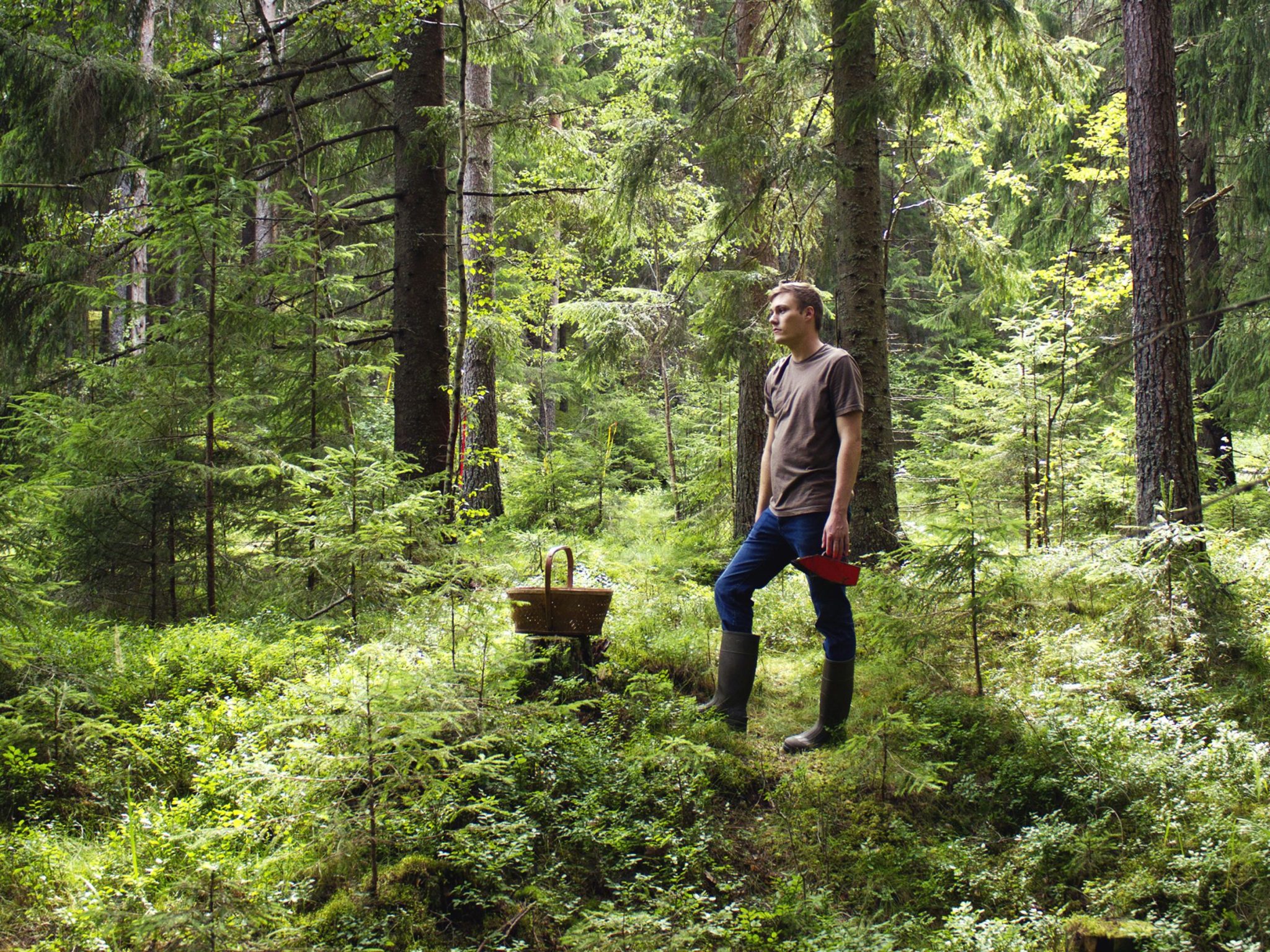
In the end I shouldn’t have been so afraid. As our internal clocks slowed to the pace of life among the cool pines and creaky wooden stairs, we grew to love our host family and their conscientious life. We learned how to bake bread and dug new beds for their vegetable gardens. We spent afternoons in wild groves of blueberries, and hunted for chanterelle mushrooms in the forest.
Being so dependent on other people wasn’t always easy, but as I look back those minor momentary frustrations pale against the beauty of the experience we had. It was a trend that became a primary theme of our travels, and one that continues to chip away at my ridiculous love of control.
Time and time again God surprises me with sweet moments of beauty, as if to say, “See? It’s worth it to trust me.”
Photo by Chelsea Frischknect