
I live a blessed life in Canada. The landscapes are breathtaking, the skies are big, education is (relatively) affordable, and healthcare is free. I am able to pursue my God and my dreams with the support of a loving family.
Unfortunately for a large population of Aboriginal Peoples living in Canada, their situation is one of injustice. Very recently a United Nations indigenous rights investigator visited Canada and brought light to some shocking truths about the conditions many Canadians live in: “Canada consistently ranks among the top of countries in respect to human development standards, and yet amidst this wealth and prosperity, aboriginal people live in conditions akin to those in countries that rank much lower and in which poverty abounds.”
 The investigator also attributed this deplorable situation in part to the dark, shrouded history of residential schools.
I didn’t know anything about residential schools until my first year of university at age 20, and there are many Canadians who haven’t heard of the colonial education system even after earning a university degree. This isn’t to say that all Canadians are ignorant; rather there is a serious flaw in the education system if the knowledge of such a substantial and regrettable piece of Canadian history remains in the shadows.
Residential schools were implemented by the Canadian government and operated largely by the Church as a means to assimilate Aboriginal Peoples to the new, colonial “white” way of life. They attempted this by forcibly removing young children from their homes and families, moving them to boarding schools to be “educated.” The goal of the program was to “kill the Indian in the child,” and “civilize the savage.” There are many appalling incidences of abuse — physical, emotional, sexual, and spiritual — inflicted upon the students by those who worked in the schools.
Residential schools existed for more than 120 years, and their legacy continues to haunt our country. Transgenerational transmission of trauma creates a damaging cycle of abuse, addiction, and other psychological complications.
This history matters. It matters for all Canadians, and not just those directly affected by it; ignorance only leads to misunderstanding. Too often I’ve heard (and even uttered) sentiments such as “drunk, lazy Indians,” or entertained the racist rhetoric that all “they” want from the government is money. The problem with this attitude is that it’s based in perceived truth. So many Aboriginal Peoples struggle with addictions and are ill equipped to succeed as a result of the generational impact of systemic racism.
While this is clearly an important issue for every Canadian citizen, there is much more to it for those who also profess Jesus Christ as their saviour: wherever truth and reconciliation are sought, Jesus is present. For evangelical Christians it is easy to adopt an attitude of indifference because “we” had nothing to do with it, as it was most often the Catholics and Anglicans who were affiliated with the schools.
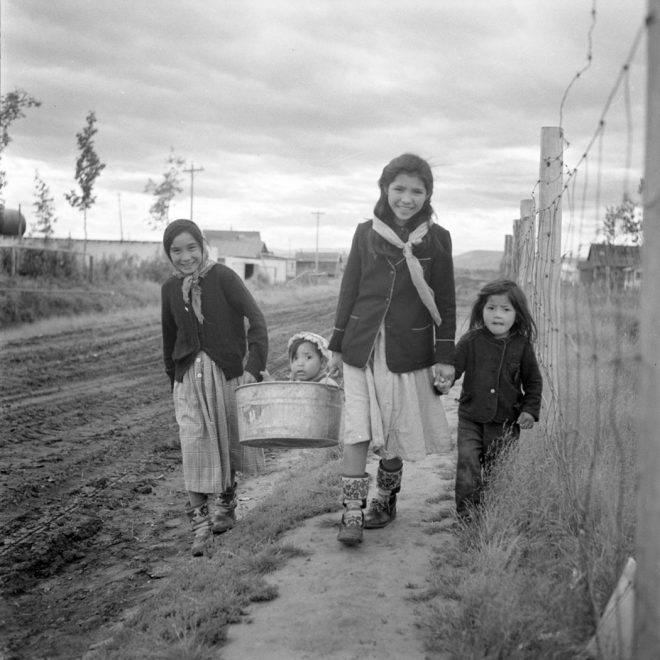
But the issue is not who did what to whom. The issue is that men and women misrepresented Christ and manipulated His gospel to assert a dominant position over a vulnerable people group. Too few Aboriginal Peoples in Canada know this Jesus because their only experience of Him, through a corrupt colonial system, is of condemnation rather than salvation.
There are children who were told by a priest or nun that they were the offspring of the devil, that their native language is evil. If they spoke their language, a needle was pierced through their tongues.
This is not the gospel. It’s exactly the opposite.
The Truth and Reconciliation Commission is facilitating events across the country to provide a space for residential school survivors to heal through sharing their stories. It’s also a means of raising awareness for the perpetrators and uneducated Canadians to be impacted their stories. Ultimately the hope is for forgiveness to be offered and received. Only then can we move forward in unity.
No one claims to have the solution in a neat and tidy formula. But talking about it is a journey we all need to embark on and contribute to in order to make any headway towards being a country where all citizens are truly treated equally.
The road is long. But the time for apathy is over.
Photos creative commons from BiblioArchives / LibraryArchives