
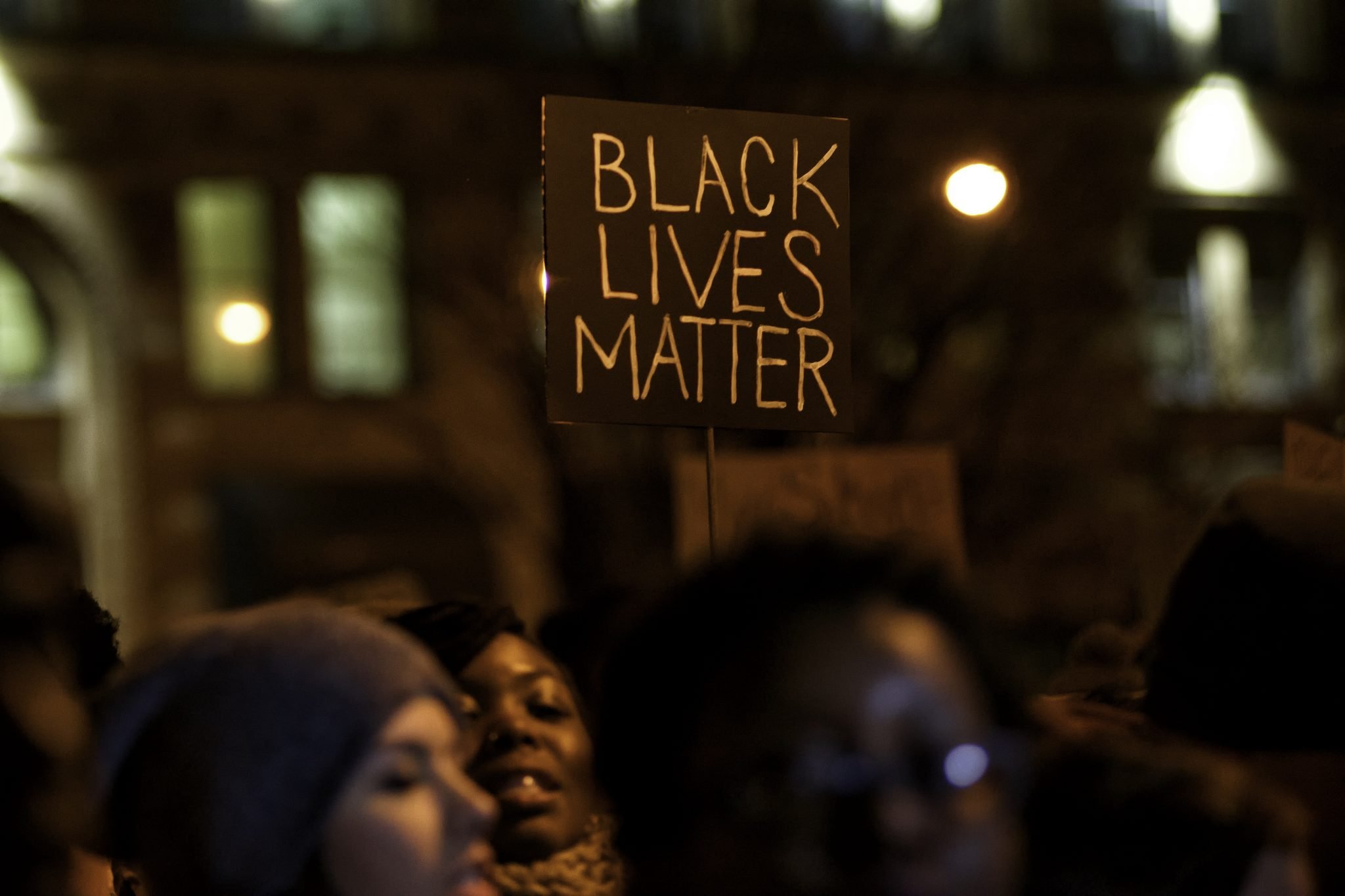
I have spent a lot of time over the past few months lamenting over what has happened in Ferguson, Missouri. I’ve read news coverage, testimony transcripts, public opinion pieces, and responses from black leaders.
And I have watched in horror the video of Eric Garner as he was strangled by a police officer on a Staten Island street corner.
I am a white millennial American woman. In college I met my husband, a black man who initiated my immersion into African American culture. After I graduated, I went to work at a non-profit in inner-city Atlanta, where the majority of my co-workers are African American and have generously opened much of their lives to me through friendship.
This life experience is an advantage many other North Americans haven’t had. But I didn’t initially seek out this cross-cultural immersion.
It wasn’t until I got to know black Americans on an individual level that I truly cared to see that racism and systemic oppressions still exist. And not just in the Deep South as I had previously believed.
Right now there is a spotlight on black and white relations in America.
And we are facing a far larger problem than not understanding the decision made by the justice system in these tragic situations.
There’s often an inherent lack of empathy for the pain African Americans have experienced for decades as a result of discrimination. Many white Americans are quick to forget the oppression and hardships the black community has faced.
There is a deep-rooted history of systemic oppression — where the systems set in place by one race do not lend themselves to the fair treatment of another — and it must be challenged. We must acknowledge that this history has lingering effects that are not being addressed.
As long as stereotypes are prevalent on both sides, as long as empathy is withheld when injustice prevails, and as long as we decide to ignore that there is still a racism problem in America, there will never be true healing.
Minority children will continue to graduate from high school ill-equipped for higher education, prisons will persistently overflow with black youth, and Americans will keep blaming each other for their country’s problems.
What can we do to change this? My father-in-law remembers decorating his high school for the junior/senior prom the day Martin Luther King Jr. was assassinated. I recently asked him what he thought as he watched protestors flood the streets in the last few months.
“I see a movement. Back during the Civil Rights era we were fighting for equality. Now, I see people of all races, including many white people, even people overseas, joining with the African American community to call for change. But it starts with a dialogue.”
As human beings, and especially as Christians, we have a responsibility to enter into a conversation. Change cannot happen overnight, but by taking action and seeking to understand the reality — the painful experiences and shocking injustices faced by our fellow citizens — we can ensure that this movement does not end in a few months with the next “hype cause.”
We must start by talking — not just on Facebook and Twitter — but to each other. We must seek to know our minority neighbours, co-workers, and fellow church members on a deeper level.
As a friend from college so eloquently put it, “You are either moving towards love or away from love. And the more you deny or ignore the existence of systemic sin and systemic racism, the more you are giving life and power to death.”
For those of us who claim the grace of the Gospel, we have an even higher call. We have a distinct opportunity to humbly open ourselves to our brothers and sisters of other races, repent of our racism — unconscious or not — to learn to listen, and to act as Jesus would.
Photo (Flickr CC) by Alan Greig.