Converging the Week
Neuroscience and Religious Belief
Neuroscience is all the rage. By claiming to “unlock” the secrets of the human mind – said to be science’s final frontier – neuroscience captures the public’s imagination in everything from disease to economics to art to religion. Sally Satel, co-author of the book “Brainwashed: The Seductive Appeal of Mindless Neuroscience,” refers to this trend as neurocentrism: “the view that human behaviour can be best explained by looking solely or primarily at the brain.”
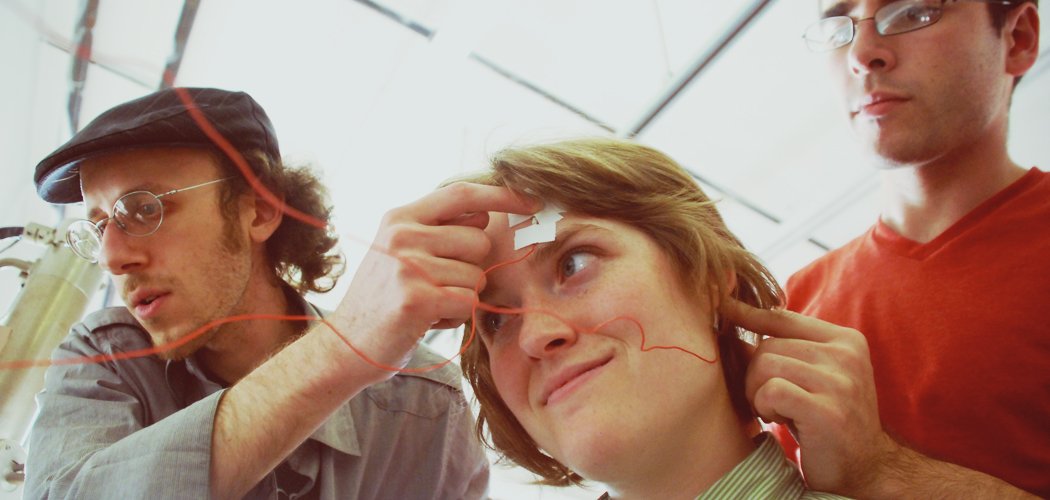
As a result, neuroscientists often drink their own kool-aid and become consumed by the endless possibilities that neuroscience claims to afford. Such is the case when Kathleen Taylor, an Oxford University researcher in neuroscience, recently said that unwanted beliefs could be treated the same way we treat unwanted illness. Speaking at a literary festival in Wales – case in point for the popularity of neuroscience – Taylor had this to say about the future of neuroscience:
“One of the surprises may be to see people with certain beliefs as people who can be treated. Someone who has for example become radicalised to a cult ideology — we might stop seeing that as a personal choice that they have chosen as a result of pure free will and may start treating it as some kind of mental disturbance. In many ways it could be a very positive thing because there are no doubt beliefs in our society that do a heck of a lot of damage.”
Taylor’s comments received international attention because she referred to radical Islam – which seems the most sure fire way to get in the news these days – as an obvious candidate for this belief treatment, but her comments were much more than just inflammatory comments against certain religious or unwanted beliefs. They were wrong.
Now, I don’t deny that neuroscience has great capacity to help us understand how our brains (or minds) work, but I do deny that neuroscience has the capacity to reduce all of life to the neurotransmitters in our brain and thus treat unwanted beliefs. There are two reasons why I say this.
First, to assume that certain unwanted beliefs might be treatable, we must also assume that we know how to identify unwanted beliefs. Who gets to decide, for example, what is a true or false, wanted or unwanted belief? Neuroscience can describe the electrochemical activities in the brain, but it cannot tell us whether these electrochemical activities are true or false. To do that we must define what is true or false before we attempt to interpret electrochemical activities in the brain; which is, not coincidentally, what philosophers and theologians have been attempting to do for millennia. In the end, neuroscience may be able to describe our beliefs, but it cannot not prescribe our beliefs.
Second, when neuroscientists reduce a person to the electrochemical activities in their brain, they are falling victim to what Alva Noë called the Cartesian dogma of neuroscience, which says that the real you is something inside of you – the real you is found in your brain. One problem of this is that it encourages individuals to evade responsibility for their actions if their brain is not functioning at full capacity. As Satal asks, “If every troublesome behavior is eventually traced to correlates of brain activity that we can detect and visualize, will we be able to excuse it on a don’t-blame-me-blame my-brain theory? Will no one ever be judged responsible?” Of course, this is not to deny the real and important role that brain function plays in the personality and actions of an individual, but it serves to debunk the idea that people and their beliefs can be reduced to neurotransmitters and neuro-pathways in the brain.
Other News:
-
CBC: B.C. Opposes the Enbridge Northern Gateway pipeline
-
Gallup: Americans say religion is losing influence in the U.S, but they also say the U.S. would be better off if more Americans were religious.
-
National Geographic: Australia is the happiest country in the world for the 3rd year running.
-
CNN: The secular organization Recovering from Religion starts an atheist 1800 hotline for doubters.
Flickr photo (cc) by Lisa Brewster