When my Grandma Britt returns from vacation she always brings me back a pack of colourful Keds socks. It’s her small way of saying she was thinking about me, and you better believe she was worried about the temperature of my toes.
While Grandma Britt’s primal urge to give me stuff has predicated our relationship, there is one subject that jolts hers from generous elder to angry scrooge.
“I Dawn’t like ve tettoos,” she exclaims. “If you get tettoos before die, you weel get no inheritance!”
A first generation Swede, the subject of body art transforms sweet Britt into wrathful Viking.
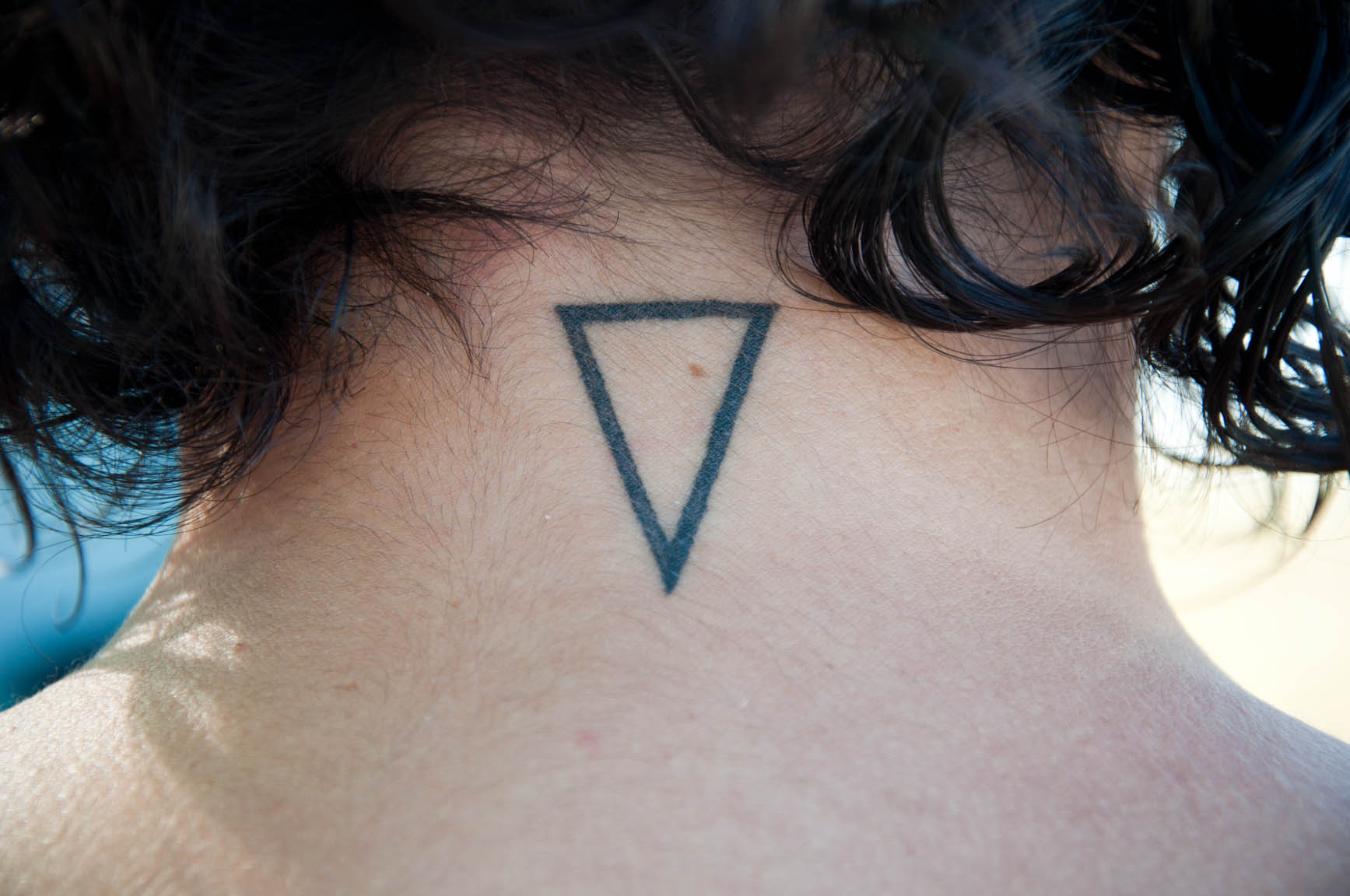
It makes sense that my grandma and I do not see eye to eye on tattoos. It wasn’t until the 1980s that tattoos transformed from the sure marking of a swashbuckling sailor to a decorative accessory for a thoughtful individual.
According to a study published by the Pew Research Center, one in every three millennials has a tattoo. It’s not the large quantity of tattooed 20-somethings that’s so fascinating, but the personal relationship millennials have with their tattoos.
In the age of Grandma Britt, a tattoo identified someone as a member of a culturally frowned upon person or group. But the tattoos adorning those in my generation aim to prove that the only group we belong to are the groups of hobbies, interests, and passions that separate us from all other human beings.
In the book Millennials Rising, Neil Howe and William Strauss say there are seven personality features that differentiate the millennial generation from their predecessors and define them to the world.
The first and most characterizing feature: “I’m special.”
From a young age, my peers and I have been cultured to believe that we are unique. Our parents — a generation known as latch-key kids due to their lack of supervision — have countered their childhoods by showering their children with helicopter-esque intentionality. As a result, millennials have spent their whole lives being told they can be the MVP, the setter of the Algebra 2 curve, and the 2028 presidential candidate.
Millennials have the privilege to contemplate not if they matter, but how they matter.
So we get tattoos. We mark our skin up with our favourite Bible verses, the flag from where we were born, and swallows in mid flight as a symbol of our own grasp at freedom. We get tattoos because they provide tangible proof that we are special.
While I don’t think tattoos mark a deep-seeded rebellion or overt vandalism of our bodily temples, I also see how a they are subtly self-serving. A tattoo has the ability to guide millennials into the specialness we so furtively desire, allowing us to feel significant, without actually asking us to do something significant. My hope is that my peers and I will pursue the kind of significance that leaves a mark on not only ourselves, but on everyone else as well. This could mean building a well in Honduras, volunteering once a week at your church’s high school ministry, or donating a portion of your paycheque to a local charity.
So, by all means, cover your arms in ink, or imprint a tiny cross on your ankle on your 18th birthday, if it floats your boat. But don’t let your pursuit for specialness end there. Instead, seek true significance: allow yourself to be be viciously generous and unbiasedly loving. Care for those around you, for those in the margins, for the world in which you live. Because these things, these small acts of love, like buying someone a new pair socks simply for their toes’ sake, are far more profound than any amount of permanent ink could ever be.
Photo (Flickr CC) by Ender8.