
With all the events surrounding the charity Invisible Children the past couple weeks, I am beginning to think that all press is not necessarily good press. Sometimes bad press is just bad press.
The press, after all, was the horse that Invisible Children gallantly rode on in their quest for relevance. With the advent of social media outlets like Facebook, YouTube, and Twitter, the press is no longer a mysterious propagandist force directing public opinion. It has become a shared platform where anyone from anywhere can shape public opinion. The trick is getting the public to listen.
Invisible Children certainly figured out the trick to get the public to listen in their latest 30min YouTube video “Kony2012”, written and directed by Jason Russell. Russell, one of the co-founders of Invisible Children, proposes a fascinating thesis in the video: that public opinion can enact social change. This thesis, on the surface, is neither surprising nor new. Democratic societies are built on the shape of public opinion and independent groups have been trying to shape that opinion for centuries. What is interesting and unique with “Kony2012” is not that Invisible Children have turned to public opinion for social change, but that they have turned to social media for public opinion.
This approach has impacted the mission of the charity on 3 levels. The first level is that Invisible Children have successfully used social media to make Joseph Kony, a war criminal and the leader of the Lord’s Resistance Army (LRA) in central Africa, famous. The film utilizes powerful stories of serious injustices through savvy filmmaking to make “Kony2012” the largest and fastest growing viral campaign in history. As of March 20th, only 15 days after it was first posted, the film has received over 100 million views on YouTube and Vimeo and succeeded in making Joseph Kony famous far before the campaign’s poster blitz date of April 20th 2012.
The second level is that increased exposure has also brought increased scrutiny. This scrutiny is not necessarily a bad thing since it encourages accountability and has helped to promote the film. However, despite increased exposure, it is on this second level that I begin to question whether all press is truly good press for Invisible Children. For example, Invisible Children’s reputation as a charity may be seriously damaged in North America and in Africa as a result of “Kony2012.” One common thread through all of the criticisms is that the campaign carries a “White Savior” or “Hero” complex that is characteristic of the privileged West.
The legitimacy of a hero complex argument is, of course, a matter of debate as our knowledge of the impact of social media campaigns is still in its infancy, but the simple fact that Ugandans and other Africans have reacted so negatively to the “white man’s burden” slant of “Kony2012” (See M.G. Vassanji) should cause some pause and force us to think not just about what we are trying to accomplish, but also about how we are trying to accomplish it. Even Ugandan Prime Minister, Amama Mbabazi, has been tweeting with the tag #KonyisntinUganda and he recently posted a video to YouTube denouncing “Kony2012” saying, “We do not need a slick video on YouTube for us to take notice.” In their effort to solve the problems in central Africa, Invisible Children seem to have forgotten about the people they are solving the problems for.
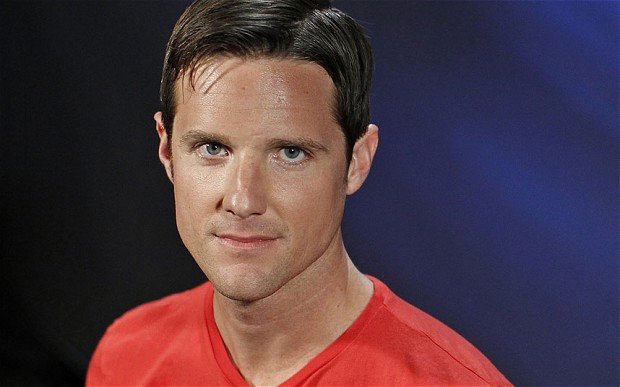
This brings us to the “hero” and director Jason Russell and the third level in which Invisible Children’s embrace of social media has impacted their mission. In recent days, Russell, because of his efforts to help solve central Africa’s Kony problem, has sadly found himself to be the victim of the press instead of the hero in the press. Late last week San Diego police detained Russell after he was running naked in the street, yelling, pounding his fists in the pavement, and disturbing traffic. Before “Kony2012,” this episode wouldn’t have even made local news, but after “Kony2012”, this episode is international news precisely because it is bad press and perfect fodder for those who love to see our cultural heroes fall.
Is it fair? Not at all. But is it inevitable? In this age of social media, I am afraid so. Jason Russell and Invisible Children serve as a powerful reminder that no one is immune to bad press and cruel public opinion. Despite their good intentions and powerful message, Invisible Children have fallen victim to a tidal wave of bad press.
But, we must remember that the story doesn’t have to end with bad press. Invisible Children and Jason Russell do not have to be defined by public opinion resulting from the events of the last few weeks. Here, I share the sentiments of Ford Vox, a brain injury physician and journalist at The Atlantic, when he says, “I do hope Russell will choose to share his story. Perhaps he could help improve public sensitivity about brain diseases as much as he’s hoped to increase public awareness of Joseph Kony.” Whether Russell suffers from a brain disease remains to be seen, but I appreciate Vox’s thoughtful and caring take on the matter and his denouncement of bad press towards an individual that is not deserving of it.
So, depending how Russell chooses to respond, the bad press surrounding his recent behaviour doesn’t have to remain bad press. Russell has a story to tell, whether it is about social injustice in Africa or neglected brain diseases in America, and I hope he uses his platform and decides tell it.
If he does, the real question becomes whether the media be willing to tell it. Again I hope so, because, after all, we are all part of the media now, aren’t we?