
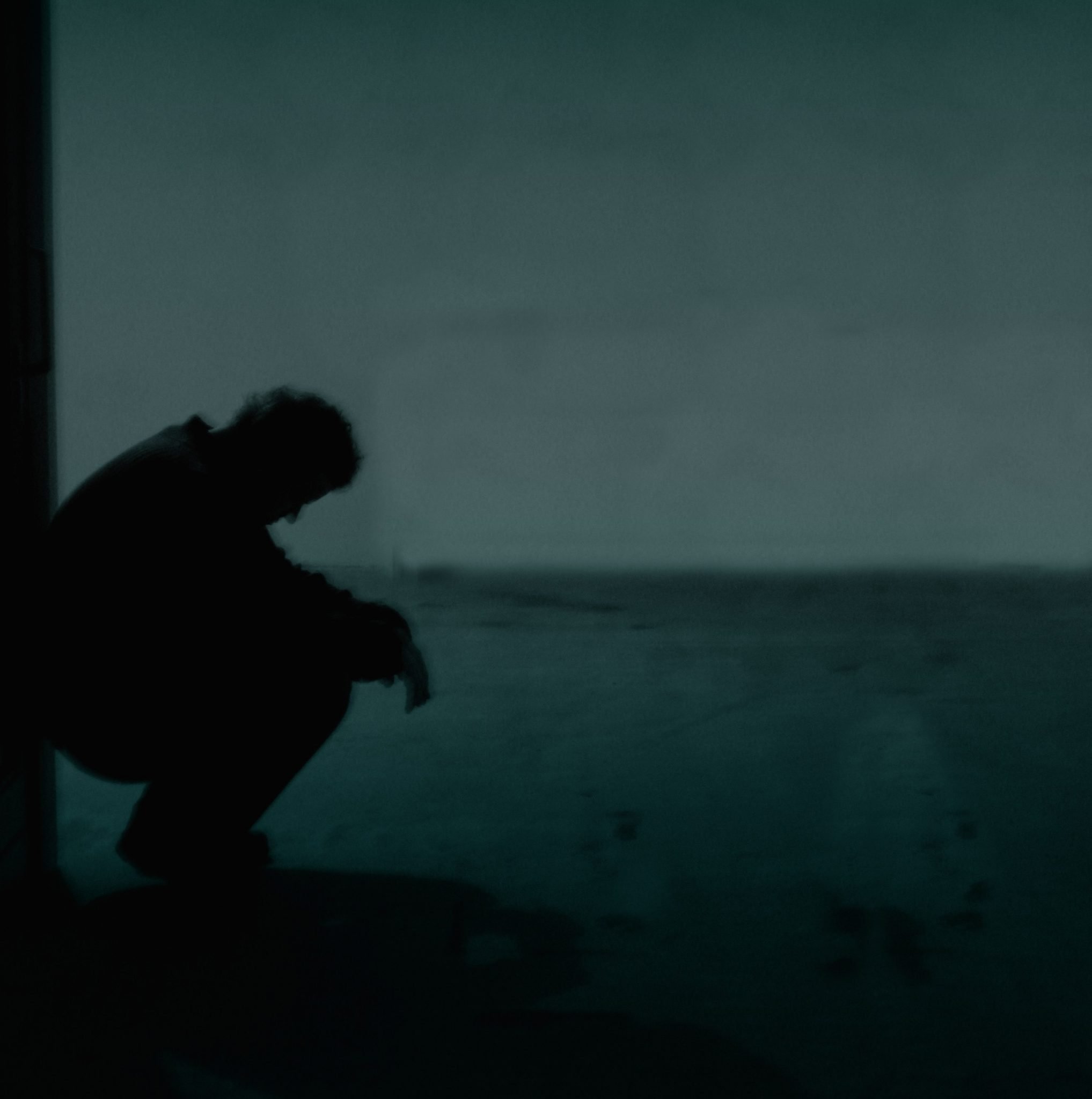
Author Tim Basselin speaks on discovering the good in the grotesque
One day when Tim Basselin was in the sixth grade, he got called to the principal’s office. His father — a mechanic for a heavy machinery dealer — had been working on a front-end loader when the tractor’s three-ton bucket swung down suddenly and slammed into the back of his head. Metal prongs crushed his skull against the concrete floor, causing multiple skull and facial fractures. On the way to the hospital, Basselin’s father’s heart stopped three times. The attending doctor expected him to die, and he asked Basselin’s mother if she would consider donating her husband’s organs. She refused. She believed that her husband would live despite the overwhelming odds.
 He survived, but despite being spared death’s defeat, the Basselins fell into a new chasm of sorrow. The accident left Jay with retrograde amnesia that robbed him of all recollections prior to the accident. He didn’t recognize his family when the hospital staff introduced them to him. “I don’t have a wife! How can I have kids if I don’t have a wife?” he demanded. It registered with Jay in subsequent visits that the woman and two boys who kept returning to see him were in fact his family. But for Basselin, Jay no longer resembled the father who would wake him and his brother on Saturdays before sunrise to go motorbiking. They would ride all day, taking recess only for lunch or ice cream. After the accident, Basselin traveled every weekend between Birmingham and a rehabilitation clinic in Nashville to visit his father, who treated him like a stranger.
The condolences poured in. “God has a plan…there’s a reason for this…” Basselin never felt betrayed by these cryptic promises, because he “didn’t trust them in the first place.” In the months following the accident, Basselin would go to his church and cry at the altar before God. “I loved going there and letting it out,” Basselin says. In the levee of pain that followed, Basselin found comfort in God’s presence.
Jay recovered to the point where he could eat, walk, and engage in conversation. While still gregarious and quick with his wit, the extent of the brain damage limited him to the cognitive ability of a third-grader. Consequently, Basselin felt abandoned by his father. He couldn’t talk about his day or ask advice from a man who no longer possessed his paternal instincts.
Frustration led to resentment as Basselin struggled to empathize with his father’s childlike temperament. On one occasion, Basselin came home from school, and seeing his father, tossed several assignments onto the couch where Jay sat. Basselin hoped his father would show approval for the high marks he received, but instead, Jay clenched his fist and struck his son in the chest. The papers had fallen onto Jay’s arm, and the contact upset him. Over time, the resentment subsided as Basselin yielded to the reality of his father’s disability. One person who helped change his attitude was Flannery O’Connor.
Basselin encountered the writings of Flannery O’Connor as an English major in college. Having grown up in Birmingham, Alabama, he found himself drawn to the Southern comfort of pine-covered landscapes and backwoods preachers evoked in O’Connor’s short stories. “The people she described were my aunts and uncles,” Basselin says with a smile. What fascinated Basselin the most about O’Connor was her use of the grotesque — a literary distortion intended to extract reactions of compassion and disgust from the reader. Basselin discovered that O’Connor’s success in applying the grotesque, as a writer, sprang from her experience with lupus. And her insight from this debilitation changed Basselin’s perspective on his own journey with disability and suffering.
What fascinated Basselin the most about O’Connor
was her use of the grotesque — a literary distortion
intended to extract reactions of compassion and
disgust from the reader.
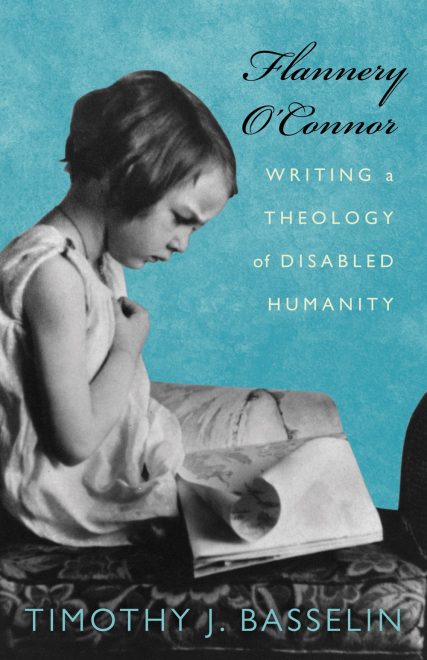
Doctors diagnosed O’Connor with lupus at 25. The disease had killed her father 10 years prior. O’Connor would face a similar fate, but not before suffering much pain for 14 years. In spite of her disablement, O’Connor did not languish in pity. In her lupus, she gained an appreciation for what Christ suffered on her behalf. Basselin explains in his book, Flannery O’Connor: Writing a Theology of Disabled Humanity, “O’Connor’s disabilities helped her develop a keen sense of how limitations and even suffering must be accepted and embraced as participation in God’s redemption of the world.” In grappling with the grotesque in O’Connor’s stories, readers may also come to recognize the necessity of violence in Christ`s death to fulfill a profound purpose. Basselin says O’Connor helps people evaluate their suffering by offering an understanding “that life is a good gift to be accepted, struggles and all.”
Learning to accept limitation has proven a lifelong endeavour for Basselin himself, now 38. Recently, after completing 10 years of graduate school, Basselin, with a wife and three kids to support, had no job prospects. His confidence further diminished after an interview that he felt he had “bombed.” In his despair, Basselin says he heard God challenging him: “Do you believe that I work in your weakness, or is that something you just write and talk about?” A week later, the interview committee offered Basselin the job. Members of the committee told him that it was precisely his vulnerability and honesty in sharing his weaknesses from his past and the pain of his father’s accident that impressed them.
When he reflects on the accident that happened almost 30 years ago, Basselin calls it one of the most difficult experiences in his life. Yet he also describes it as “beautiful.” The church community cared for his family, and Jay’s workplace provided for his father’s medical expenses. Through it all, God’s presence served as an anchor.
Four years ago, Basselin’s parents celebrated their 40th wedding anniversary with their two sons and their wives, and six grandchildren who adore “Papa Jay.” His father’s disability still challenges Basselin’s patience, but he realizes that he needs to “make space for his father to be who he is.” In this space, miracles continue to abound both with Jay, the man most affected, and with his marriage and family, which thrives with a special intimacy.
Why did all of this happen to Basselin and his family? The reason remains a mystery. For Basselin, with the help of O’Connor, finding hope and truth in the mystery begins by accepting the grotesque.
Three to Read
Tim Basselin lists his favourite works by Flannery O’Connor, the 20th century writer who typified the Southern Gothic genre.
“Revelation”
Described by O’Connor as a “purgatorial vision,” the whole story is told by a woman whose vision of heaven overturns her self-concept of righteousness and worth.
“The River”
Does baptism have any true significance, or is it religious trickery? Readers must confront the purpose of this Christian sacrament after a young boy seeks its beauty by drowning himself.
The Violent Bear It Away
This second and final novel published by O’Connor challenges the measures that humans embrace in order to avoid suffering, and the ideology that the salvation of the world comes through reason.
Photo (Flickr CC) by ParanoidMonk.