A man’s mind, once it has been stretched with a new idea, can never return to its original dimensions. (Oliver Wendell Holmes)
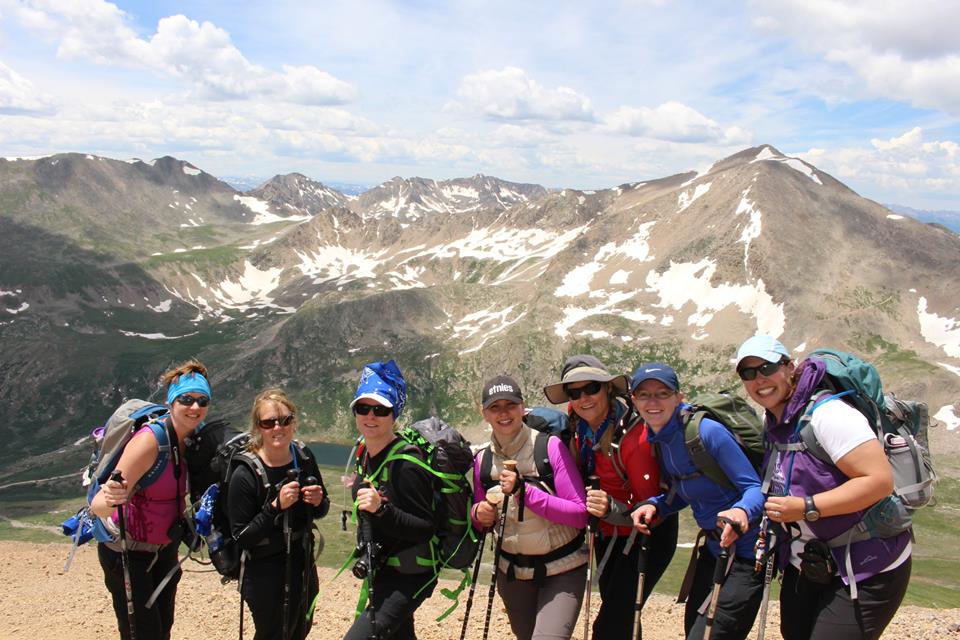
“The climb has taken me far beyond the mountain,” says Denise Heppner. She was one of 45 women from around the world who climbed to Everest Base Camp in Nepal to raise global awareness of human trafficking. I sat down with her to talk about the Freedom Climb, and how learning about human trafficking has revolutionized her perspective.
What’s the Freedom Climb about?
The Freedom Climb is not simply about climbing a mountain; it’s a symbol of the struggle that 27 million women and children face every day. It’s a voice for those who have none, a way to influence those around you to take action and address this injustice. I heard about it through an Operation Mobilization [OM] speaker in my church, after which my husband challenged me to do it. I thought about it all week, telling no one, until the next Sunday, when a woman turned to me and asked if I was going to Everest. I burst into tears!
How do we separate the hype from the help?
To be frank, [at first] I thought: is this just about me and my desire for adventure? I realized that it is not; it’s a powerful symbol of a greater issue and a way to generate action to relieve suffering and confront injustice. The mountain is a focal point which links to the greater need of trafficked victims. And, of course, significant finance has been raised to directly help women and children in several countries already.
What happens if we don’t face up to injustice?
If we don’t collectively stand up to injustice in the world, it grows. There are always those waiting to take advantage of those weaker than them, whether for power, profit, or pleasure. Ignoring that only feeds the monster. Human trafficking is the second-largest economic activity in the world, after drugs. It will increase and overtake drugs, because you can sell the same human being over and over again, whereas with drugs, you sell it once and your product is gone. Turning a blind eye to this, as individuals and churches, says that we think this is acceptable. Trafficking, by the way, is not something that only happens on the other side of the planet; it’s happening in Canada and even in our own communities. There are 30,000 young girls trafficked every year in Canada alone — not so much through kidnapping but by being wooed by pimps with attention and gifts to the point of being indebted to them. By then you are their object to be sold, used, discarded. Parents and children need to become aware and wise to this evil. We need to pray against it. We also need to pray for those in society from abusive backgrounds that have come to see this evil as OK — what has happened to their soul that they can live like this?
Isn’t this really a justice issue? It’s noble to help an individual but, unless the structures that create injustice are challenged in a way that changes the rules to make a better future possible, what’s the point?
Without question, we need to engage in the long fight to eradicate this evil in societies. But, as with other slavery, this takes time and commitment at state levels as well. Right now, it’s as if we are snatching babies from the river: it’s absolutely necessary, but we need to push upstream and stop what causes them to be tossed into the river. In the meantime, millions of victims desperately need our help to survive and to see real change in their own lives.
Tell us an example of someone who has been directly helped by Freedom Climb.
OM in Moldova offered Christina the opportunity to do a small business training course. After this, she opened a small bee-keeping enterprise and earns enough to support her family while having a positive presence in her community. In Zambia, a 21-year-old from our church is part of the Freedom team. Along with three other women, she runs the Tabitha Skills Development program which provides women the skills in sewing and other work to earn a livable income for their families. Some of the women are escaping from the sex trade and others are clearly at risk. Actually, many women are at risk because there is no other work available; they are widowed or abandoned or have extra financial burdens to carry. These projects are thus both redemptive for those freed from slavery, and preventative for those at risk.
What’s your dream in all this?
My dream is that trafficking would become history. Until that happens, I notice that my concern for the welfare of the weak and powerless and hidden opens my eyes to how I treat those around me. This I wish for all of us: to treat life as a gift and share it.
Speak up for those who cannot speak for themselves; ensure justice for those being crushed.
Yes, speak up for the poor and helpless, and see that they get justice. (Proverbs 31: 8–9)
Find out how you can participate in or give to the Freedom Climb, and for more information on Operation Mobilization Canada.