When visiting your local coffee shop to get your caffeine fix for the day, you may notice a sign claiming that the store uses “fair trade” coffee beans.
In recent years the fair trade coffee movement has exploded. But you might be asking yourself, what exactly is fair trade?
According to the World Fair Trade Organization, fair trade is a trading relationship that seeks greater equity in international trade. This involves the payment of a fair price — which covers not only the costs of production but also enables environmentally sustainable and safe working conditions for producers.
Ten Thousand Villages celebrates its 65th anniversary this year. You can walk into any one of the 49 Ten Thousand Villages retail stores across Canada and purchase jewelry, ceramics, blankets, coffee, chocolate and more from 35 countries in the developing world, all with the knowledge that the producers and artisans have been paid a fair price.

But paying a fair price is only just one part of their mission. “We make long-term commitments to our producer groups — which is just as important if not more important to them than a fair income,” says Ingrid Heinrichs Pauls, education and media coordinator for Ten Thousands Villages Canada. This commitment includes supporting producers even if a product is going to be late because of unforeseen circumstances — as in the case of a Christmas product line from India that ran late because excessively hot weather caused many of the workers to fall sick.
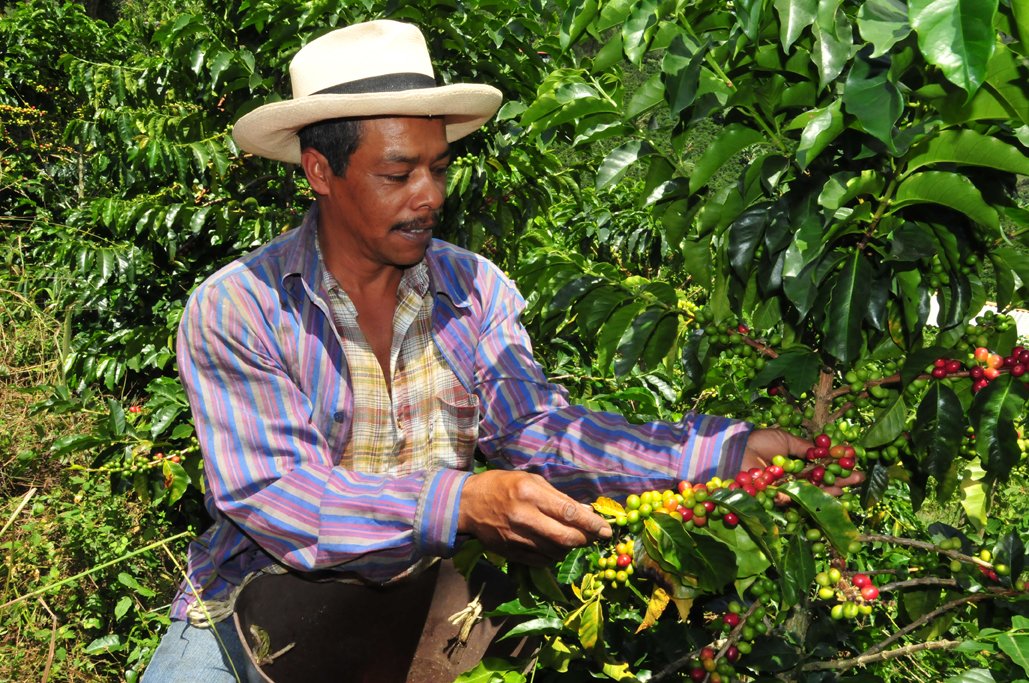
In addition to their range of artisan handicrafts, Ten Thousand Villages stores also stock coffee beans and dried fruit from Level Ground Trading, a fair trade organization based out of Victoria, BC. The company’s first trading relationship was set up when founder Hugo Ciro traveled to Antioquia, Colombia to meet with producers. After discussing the needs and desires of the farming families, Ciro organized teachers and community members to form Famicafé — a fund that provides scholarships for the community members to attend high school and university.
Since its founding in 1997, Level Ground has expanded to include dried fruit, cane sugar, and coffee beans from six countries — with a seventh, the Congo, added in October. Stacey Toews, co-founder and communications catalyst, says that fair trade is about the needs and realities of the producing communities.

“Our main focus is that fair trade is about dialogue and transparency and respect between the producing and consuming communities,” Toews says. “We’re always looking to strike that back-and-forth dialogue so that . . . we can find out legitimately what producers are needing to be paid, so it’s definitely fair on their terms rather than looking at some rather generic formula for international trade that says this is what you should be paid”.
Toews also points out that businesses can sell products that have been fair trade-certified by an organization such as Fairtrade International, but that doesn’t necessarily mean the business is focused on the welfare of their producers. Dr. Anil Hira, a professor of Political Science at Simon Fraser University who has done research in international trade, agrees that fair trade certifying organizations often don’t have the funds and the capacity to regulate fair trade.
“There’s no regulatory body, no agreed upon definition, and there’s no authority to actually enforce whether somebody is really following this or not.”
Both Toews and Pauls acknowledge these challenges, but say that with a bit of research, a consumer can find out whether or not the company they are purchasing from has the best interests of the producers in mind.

Level Ground, for example, has chosen to focus on being transparent about their trading costs rather than holding themselves accountable to an organization or certification. Visitors to their website can see the breakdown of their costs. “[You’ll] see all the details of where the money flowed, all the green unroasted coffee we purchased from the community,” Toews says, “what was the world price the day we bought, what was the price we paid the day we bought, and how much of what we paid actually went to the farmers.”
Ideally, buying a fair trade product should not be a choice that someone has to make, it should be the norm.
“The consumer shouldn’t have to choose to buy a safe product,” says Dr. Hira. “This should be just a matter of public regulation, just like they have public regulation against child labour, and public regulation against poisonous food; this should just be a normal thing that everyone is willing [to do].”
Something to think about the next time you fill your mug with fair trade coffee.