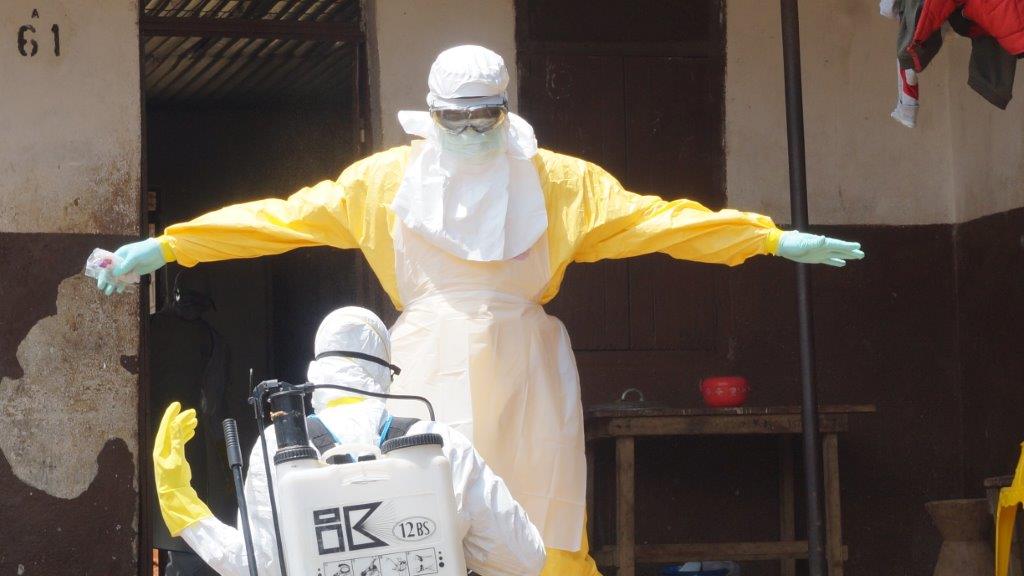
If I had heard the word Ebola a year ago, I likely would have laughed at the absurdity of a word that sounds like a jumble of letters used to win a close game of Scrabble.
Fast forward to today, when Ebola is a household word, sensationalized by the media, eliciting fear and uneasiness whenever spoken out loud.
The fear of death at a young age due to Ebola has yet to strike me.
But I do fear something.
Something more than dying from a rapidly spreading disease in West Africa.
More than the steadily growing state of panic in the United States.
More than the possibility of a healthcare crisis.
At the heart of the matter is the fact that Ebola is more than a medical issue. It’s an issue of humanity. And how we have responded is what scares me the most.
Last week was a game changer; suddenly Ebola went from being a disease half a world away to a disease much closer to home. Suddenly, Ebola went from being someone else’s problem to our problem.
Suddenly, or maybe not so suddenly, humanity’s face was revealed. And it was eye opening.
Our call as Christians to serve and love and forgive others was all but forgotten by far too many. Looking through people’s comments to various news reports and statements, I can probably count on one hand the number of people — out of hundreds — who expressed any type of compassion or empathy towards a man who lay suffering from the disease in a Dallas hospital. Instead, voices of anger and hatred and fear responded.
Anger towards the man who brought the disease to the country. Anger that he had potentially exposed others to the disease.
Some anger and fear is understandable to an extent. But hatred has also seeped through. Hatred in the form of suggesting that citizenship and insurance status should determine whether he should have received any medical care. Hatred towards the doctor and nurse in the emergency room who first treated the man.
As people focus on their own health, and worry how Ebola may effect us in North America, it seems we have all but forgotten about the fact that Ebola has already taken thousands of lives in West Africa. That the situation in West Africa is far more significant and severe at this time in regards to medical access and care.
Instead of directing anger and hatred towards people directly involved in the situation, we should be praying for their recovery. Praying for people who have been impacted by the disease.
Praying that God will provide healthcare workers in West Africa with the knowledge and skills to care for the ill. And we should forgive healthcare workers, instead of blaming them for mistakes.
Rather than berating hospitals and leaders involved directly in healthcare policy-making, we should be giving thanks that we live in a place with readily available healthcare.
While those who have been possibly exposed to Ebola are being monitored for any physical signs of a deadly disease, I think it’s prudent for the rest of us — myself included —to start monitoring our hearts.
Photo (Flickr CC) by European Commission DG.