People are moving all around me. People sitting, standing, walking, or kneeling. Children grab at their parents. Sometimes they cry or giggle, contributing in their own way to this constant flow.
Music fills the room; singing becomes inseparable from prayer. The service has formed into a dance of coming and going, prayer and praise, sound and silence. It is not so much chaotic as it is highly textured with the trappings of life unfiltered against the brokenness and practicalities of our messy lives.
I used to believe Communion should be much more orderly. Quiet and sombre. Almost sad as we dwelt on our own inadequacies. But person after person moves past me and I hear the whispered words, the sounds of shoes, the cry of a child, and that continual proclamation of the priest.
“This is Christ’s body broken for you.”
I realize that within this movement, this empty-handed march toward the altar, we as a Church are embracing the very definition of the word.
Communion.
It is a celebration of that common identity, a reminder that we come out of our bondage and into the freedom, gladness, and light of God’s presence. Honestly, it isn’t very sombre or calm or sad. It is loud and messy, but more than that, it’s joyous. It is a cause for celebration!
Soon it’s my turn to join the line of coughing, crying, living, noisy sinners that come as much with boldness as with fear. Together we love and weep and bear our hearts against the tide of life that so often leaves us empty. It seems dangerous to arrive so empty-handed. This is not the advice the world gives. Be prepared, they say. That is how you succeed. But in fact I know my heart is unprepared.
As she presents the bread to each person in the line beside me, I see tears against the deacon’s eyes. Does the beauty of this action move her, or do her thoughts linger with a story of the specific hands into which she just placed the sacrament? Who knew that such a small and seemingly insignificant wafer could contain so much emotion? So much life? It’s strange and wonderful all together.
“This is Christ’s body broken for you.”
We can argue over the symbolism, the substance, or the theology. But whatever the belief, something happens. Something is remembered, reminded. Something changes. Something is broken and remade. Something heals.
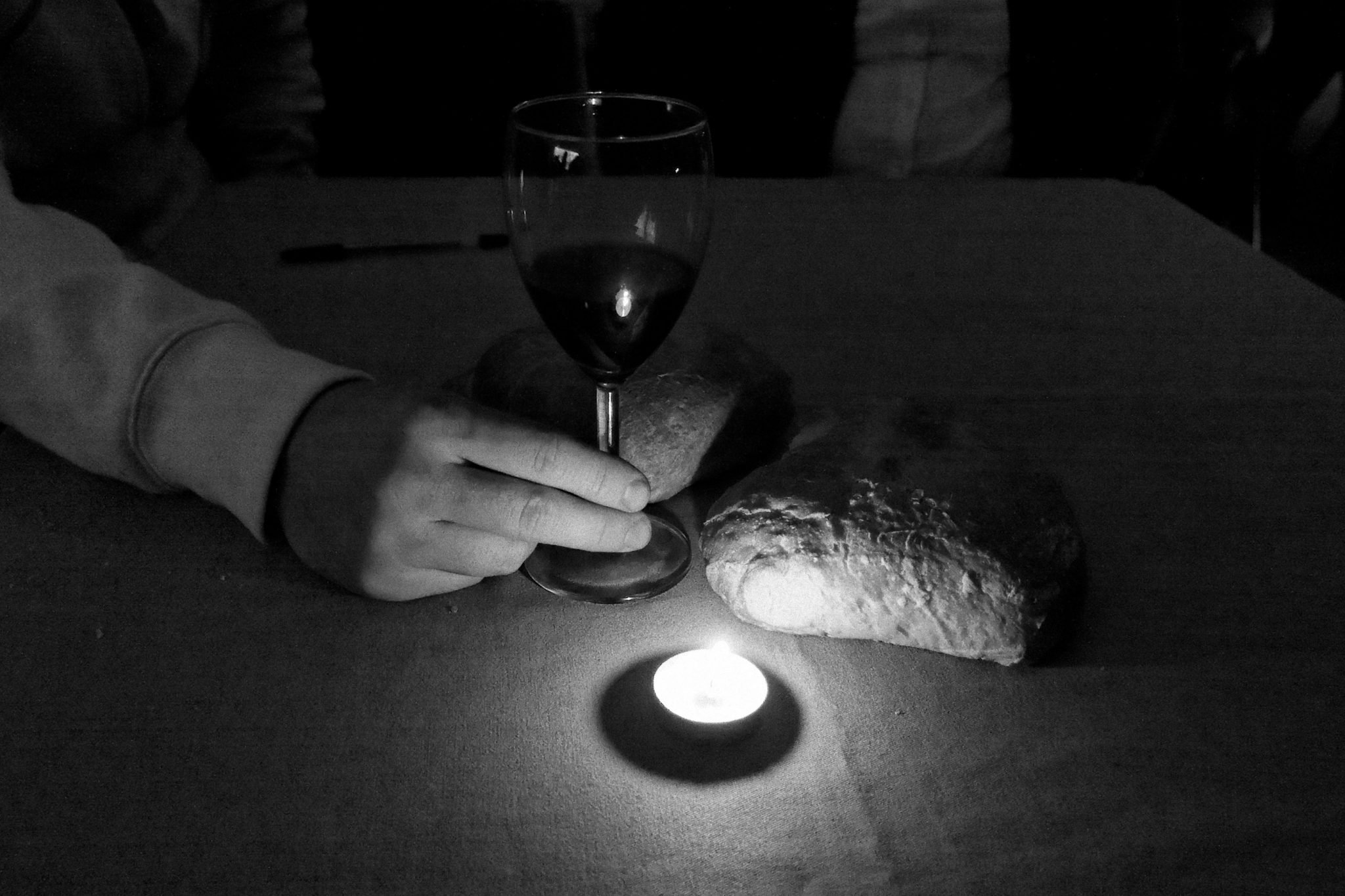
My hand trembles as I dip the wafer into the cup.
“Seth, brother, the blood of Christ shed for you.”
Again, I am reminded that this is a dangerous affair. Not only because we come with empty hands, but because we leave filled with a tangible reminder that our God, while good, is anything but safe. By eating and drinking, by experiencing God’s grace, we open ourselves up to be broken bread and poured-out wine. This purpose, too, is rarely neat or solemn, but loud and messy as we work out our salvation and proclaim this mystery of faith.
Walking away I notice my hands are once again empty, full for only the briefest of moments. God gives us our daily bread, but just like Israel’s manna, it is not for us to store or keep. We consume it, are sustained, and gently reminded that our hands remain empty: in both need and in constant readiness to love and to serve.
You are welcome to this table.
Photo (Flickr CC) by Dean Ayres.