
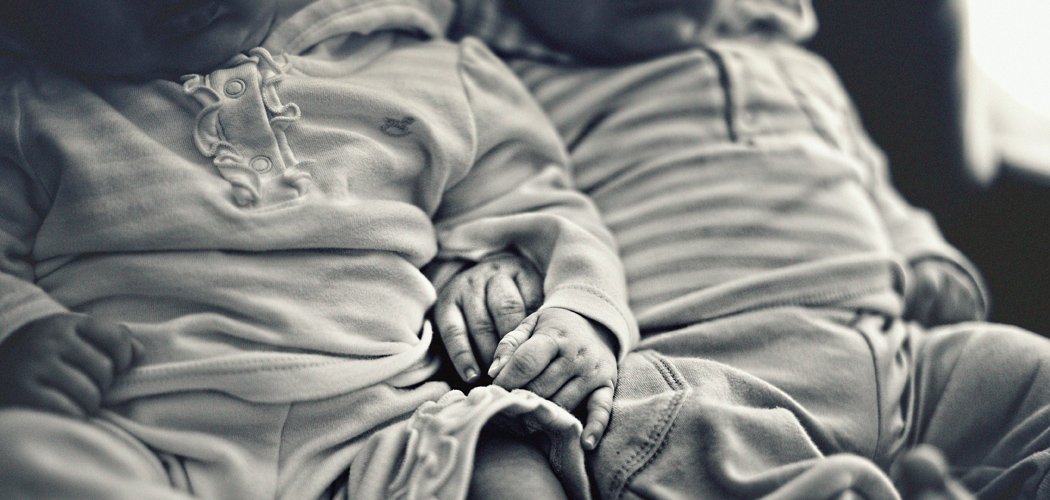
When I tell people I have a twin brother, they inevitably respond with one of two questions.
1. Does he look like you?
Or
2. Are you two close?
Number one is easy to answer: no. I’m a girl so we’re not identical, and besides brown hair we really don’t share any physical features.
Number two is where I get tongue-tied. Pat and I are not close in a conventional twin-ish way. We do not spend a lot of time together and we’ve never had a secret twin-language. Growing up we were not even in the same grade, let alone school. We were individuals.
The cause of our divergence is simple. Patrick is on the autism spectrum. He has Asberger’s Syndrome, in conjunction with a non-verbal learning disorder. Asberger’s differs greatly from the traditional presentation of autism in one key area, social awareness.
Individuals with Asberger’s are not content living in their own bubbles. People like Pat want to interact and to be part of the world around them. But they lack the basic tools for interaction that most take for granted. Patrick had to be taught subtle cadences and gestures of subconscious communication. He had to learn through rote memorization, as one would learn the times tables.
Patrick’s perspective is akin to that of an alien from another planet. Though he wants to communicate and learn, everything is foreign to him. There are so many instinctual cues that inform a person’s intention; simply memorizing general tropes is insufficient.
For instance, one can associate a raised voice with anger, but what if the yelling is merely feigned for amusement? Many times Patrick has mistakenly tried to intervene and diffuse an “argument” between our parents, who were just bantering about who is the better driver. He feels immense unease at discord, which seems to lurk around every corner and turn his day upside down.
Many people’s natural reaction to a stressful situation is to avoid it or do whatever possible to keep it from happening again. Patrick does not shy away from wading out into the world, as inherently confusing and difficult as its many facets may be.
Pat has gotten to the point where he can navigate most public and personal interaction with minimal awkwardness through years of behavioural modification and conscientious guidance. Unfortunately his progress is limited to the social realm. Asperger’s is treatable in that he can modify his actions based on instruction and observation, but the non-verbal learning disorder handicaps him incontrovertibly.
Intellectually he is far from disabled. He would never have progressed so far if he was. But, he is unable to conceptualize basic tasks like calculating tips or change, and any process that requires varied, intuitive responses (driving on highways, skilled labour like carpentry). So Patrick’s job options are extremely limited. For several years he worked as a janitor at a local supermarket, a job that he hated. Not because of the chores he had to do or the poor salary, but because the position was part-time and would remain that way because of the company’s hiring policies. The inconsistency unsettled Pat to the extreme, and he became extremely depressed.
This past year, however, our prayers were answered and he was hired as a dog washer/handler for a small grooming business. He works four days a week wrangling tiny Yorkies and muscular Rottweilers, providing a unique combination of physical strength and gentle disposition. As far as occupations go, cleaning canines probably runs far down on most peoples’ list of ideals.
But Patrick is over the moon.
He has fully embraced the opportunity to be a part of the workforce. In his eyes, earning an honest paycheque and working a consistent schedule constitutes the extent of his deepest hopes for a job. He is walking, talking proof that adaptation can occur without the loss of innocence or acquirement of cynicism. I do not want to imply that people with high-paying jobs or several degrees are in any way misguided, but sometimes we get caught up in what initials are listed after our names or what university we attended. We cannot help it; we make judgments based on superficial facts. Patrick is incapable of such intuitiveness. When he meets someone, they are brand new. The shadows of his past acquaintances never fall on a new face.
I am a better version of myself having witnessed my brother navigate his life. Even if he and I don’t have Wonder-twin powers or a knack for reading each other’s thoughts, we are close. One cannot exist in Patrick’s world and not be affected by his innate sincerity.
Flickr photo (cc) by AMERICANVIRUS