
Early this year, Maclean’s magazine released its timely, relatable, and very discouraging summary of “the new underclass.” Basically, that’s all of us who graduated in the last five years or so. We’re overeducated and underemployed.
“It turns out that most young people are working,” the article says, “typically in jobs well below their levels of qualification, and often outside their fields. Those lucky enough to get a toehold in their chosen professions have a hard time getting enough hours or pay to support themselves, statistics show.”
Underemployment, along with its nefarious cousin unemployment, often comes laced with self-doubt, anxiety, and fear. And of the underemployed, many of us are creatives: writers, painters, designers, singers, etc.
But creatives, take heart: there are ways to optimize this disconcerting time.
Get up, get out
Natasha Crozier is a professional blogger covering work and calling at mycallingiq.com. She is also a creative who has gone through her own periods of under/unemployment. She gave me this advice early on in my year of irregular work: “Set an alarm, get dressed and ready for the day — every day.” Just this small step gave me a much stronger sense of purpose for my day.
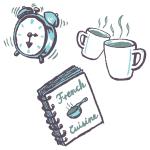 After you’re up, leave your house. It’s especially important for you to get out and experience the world. Take walks. Talk to strangers. Out there is where inspiration happens, stories are gathered, and life is lived.
If you have the time, explore everything. Take on odd jobs or join a temp agency. Work on all the creative side projects you daydreamed you would do if you only had the time. Invest in free or low-cost hobbies that stimulate your creativity but don’t necessarily bring in income: book reading, going to galleries, quiet retreats. Also go on hikes, learn to cook, or have coffee with a friend on their lunch break. “Do all the fun things that don’t even seem purposeful, useful, or educational,” says Crozier.
Just do it — with help
Think of ways to do the creative work you love on a daily basis, which will not only sharpen your skills but help them to grow.
Make a daily plan for a few things you want to accomplish. If you’re working on a big project, break it into small parts and give yourself deadlines: Turn, “I want to write a book,” into, “I want to write 500 great words by Friday.”
Start a project that has deadlines associated with it. For instance, if you’re a photographer, start a blog where you promise to post two times a week. (Bonus: this doubles as a constantly updated portfolio to share with potential employers). When I was underemployed, I relied on writing contests to motivate me — those deadlines motivated me write two personally important pieces that could easily still be floating around in my brain without them. Give away your creative skills to friends and family as a gift. Say yes to any volunteer opportunity where you could bring your creative skills, even if it doesn’t strictly fit your creative identity.
Accountability within a community is also essential. Crozier suggests “hiring a manager” — a (free) friend who will check in on you and encourage you in your work.
Do something you like so you can do what you love
When Kimberely Dawn fell in love with theatre, it meant also realizing the steady career path she’d chosen as a teacher wasn’t right for her. Unfortunately, even after classes and an apprenticeship at a theatre company, one doesn’t just get hired for her dream job of director. So after years of unfulfilling restaurant work, she decided to go back to school for massage therapy: a job she knew she would enjoy, and knew would leave her enough time and energy to invest in her own personal creative projects after work.
 The lesson? Do something you like, however practical, that can support you and support your desire to be creative. When Kimberley graduates from esthetics school, she hopes to build on her extensive volunteer and side job experience in the theatre and other creative industries. “I’ll make my own shows happen,” she says, with the practical support of doing a job she enjoys.
Change how you see yourself and your work
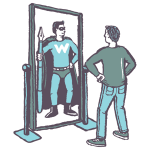
“Don’t wait for permission from someone to decide you are an artist,” Crozier says. “You don’t need to wait for label validation from other people.” This can admittedly be a scary step. Calling myself a writer when I was working part-time from home as an executive assistant felt something like lying when I first tried it out. But in truth, I was a writer: I’m trained to write, and I write regularly. It’s a freeing realization.
“It’s that choice,” Crozier continues, “to embrace your calling as more than a hobby,” even if it doesn’t fit your traditional definition of “work.”
Enjoy it
 There are many barriers to fully enjoying underemployment — finances, being unable to move out of your parents’ house, or the more existential “lack of purpose.” But making a point to appreciate the small graces that come with underemployment can make all the difference.
Start broadening your definition of a paid creative job. I thought if I wanted to be a writer, I needed a job at a magazine or newspaper. When I finally found steady work as a writer, it was in fundraising — a field I didn’t quite know existed. And my art major husband? He works at a software company doing communications, where his creative side is nurtured in unexpected ways. Go on informational interviews with anyone whose job interests you, even if it isn’t in your field, to learn about a broad range of work options.
Now is the time in your life to invest time in life-giving, non-money-making side projects. When I was unemployed, I worked some fantastic odd jobs and learned things about myself I wouldn’t have at the ol’ nine-to-five. It was sometimes sad, and sometimes I was anxious, but mostly, it was a time to live the stories that will one day make me a better writer.
Flickr photo (cc) by allthecolor
Illustrations by Jonathan Fajardo
This article was originally published in the printed edition of Converge, September – October issue #14