
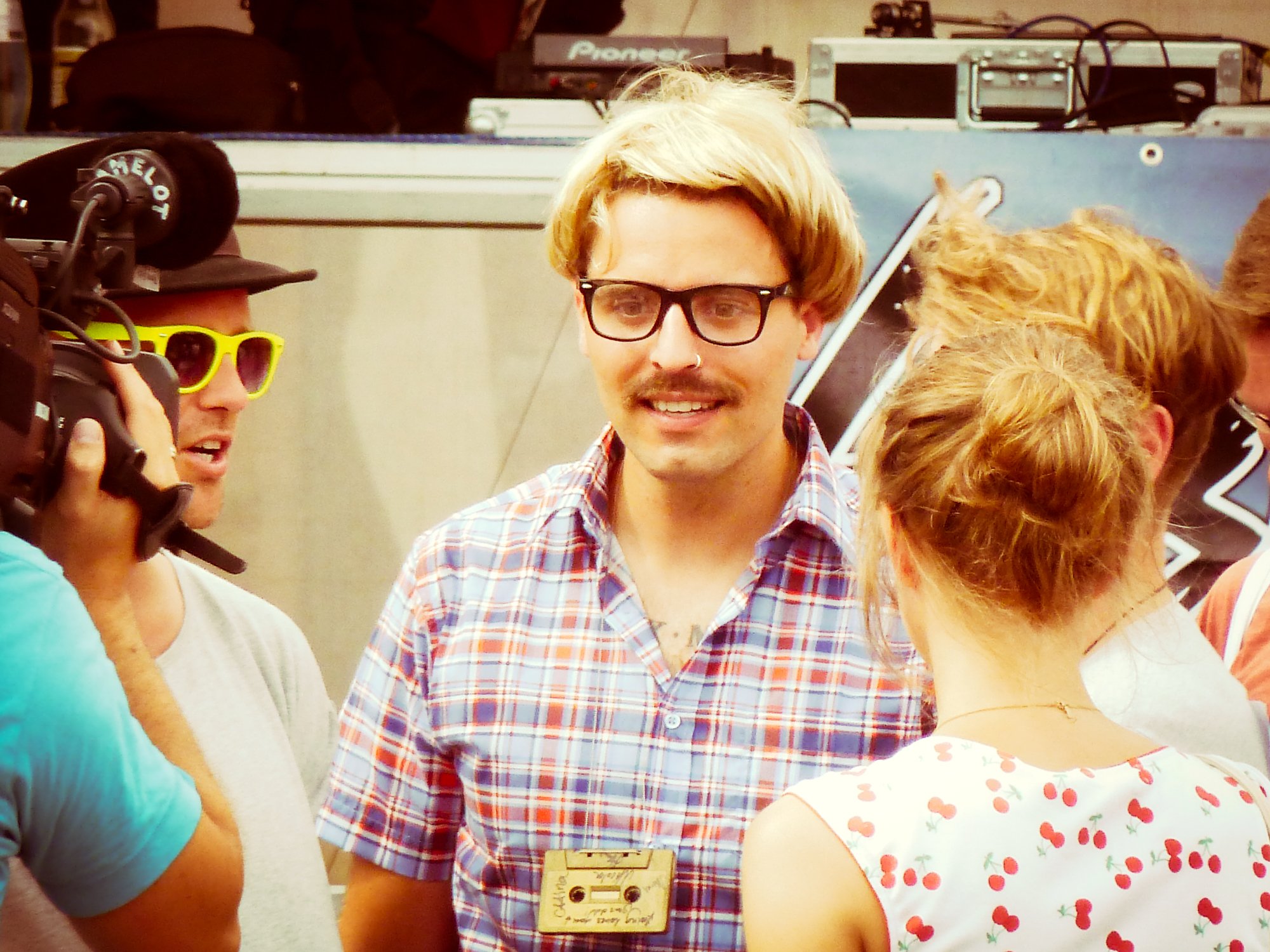
But is that really fair?
It was 1955. The beat poet Allen Ginsberg riffed aloud part of Howl, his profane and profound poem to an audience of artists and jazz heads in San Francisco’s Six Gallery.
The word hipster was formally and artistically spoken for the first time.
Howl was eventually printed in 1956. But when US Customs failed to censor and seize all copies of the offensively sacrosanct work, the poem’s publisher was arrested, and along with Ginsberg and his poem, put on trial for obscenity. The poem endured through the legal battle, however, and it reverberated throughout North America when it was declared not-obscene-enough to warrant censorship.
Most people don’t recognize a correlation between current day hipsters and the angel-headed ones Ginsberg talks about. But it’s nevertheless there.
I’ve observed and participated in hipster culture long enough to see it for what it is. At its worst, it’s the dead end of our civilization. But at its best, it’s our generation’s reaction to the choose-your-own-meaning culture we were raised in, the culture that repeatedly told us to be and buy whatever you want.
Like most teenagers, I searched for meaning and had a hard time finding it. Most people in the high school I went to equated cool with listening to 50 Cent and wearing brands like Ecko Unltd. and Fubu. (Even though probably 98 per cent of the people at my school were white and middle to upper class.)
How they found their identity in a subculture that was formed in drastically different circumstances was fascinating. The cool kids, like most of us, were searching for something perceived as genuine. I opted for a different expression of the person I wanted to be, although it was probably just as peculiar.
My friends and I discovered punk rock, sort-of-skinny-jeans at Wal Mart before skinny jeans existed. (Picture a 14 year old boy in Wrangler knockoffs that are two sizes too small and you’re getting close.) We started lame bands that played cramped and thrashy shows in Elks Lodges, underground parking lots, and Rotary Clubs.
We didn’t have a word for what we were doing at the time. Myself and others like me born in the mid-’80s were simply making meaning where meaning was hard to find. Then a few years later, we ended up in a subculture that went from being known as punk, to emo, to hardcore, to straightedge, and then — finally — to hipster.
We went from being known as punk, to emo, to hardcore, to straightedge, and then — finally — to hipster.
The word was always used in a pejorative sense to describe people like me. With time, we became the punch line of many jokes. We became the subject of a lot of academic-sounding articles that claimed to know why we’re terrible people, and why we like, do, and wear certain things.
It has been said that people tend to fear what they don’t understand. I think people make fun of what they don’t understand, too. And what many people don’t get is that hipster culture, like many other sub-cultures that grew out of the strange soil of the ’90s, is a generation’s attempted reaction against capitalism. It’s a reaction against a culture saturated with the principles and pitfalls of consumerism.
As I grow older and find myself less able to relate to the most recent expressions of hipster culture. I am constantly reminded that the hipster reaction against the mainstream has become less of a shout and more of a sigh; more of an implosion than an explosion. “Being a hipster” has ultimately become a decision to react to capitalism by simply not really reacting at all — beyond shrugging ones shoulders, looking bored and dishevelled, and searching for the latest underground club with the secret party to get blitzed at and make poor decisions.
Just like Ginsberg’s, the hipsters of our current times are searching for that starry dynamo in all the wrong places: debauchery, hedonism, peculiar consumerism, alienating exclusivity, and the deadliest of revolt-murderers, apathy.
Like Ginsberg’s beat colleague Jack Kerouac wrote in On The Road, the hipsters of today strive to burn, burn, burn like fabulous yellow romans candles exploding like spiders across the sky. But that bright burning eventually flickers and fades at 3 a.m., when the last drink is had, the last cigarette smoked, and the nihilistic festivities finally end. Until the next weekend when more roman candles are lit and more fizzle-outs happen.
But the starry dynamo is still out there in the night. It always has been. The hipsters of today just need to stop searching for it in the wrong places. They need to channel all that angst, exasperation, and buried rebelliousness into a better place; a place where meaning is created rather than rejected, where passive angst evolves into active passion, and where hopelessness turns into growth, transformation, and hope.
Then, only then, will hipsters begin to truly find the ancient heavenly connection to the starry dynamo in the machinery of night.
Photo (Flickr CC) by Timo Luege.